Buy 61.eu ?
We are moving the project
61.eu .
Are you interested in purchasing the domain
61.eu ?
domain@kv-gmbh.de · 0541-91531010
Buy 61.eu ?
Does "Passer" use "avoir" or "être"?
"Passer" uses the auxiliary verb "avoir" in compound tenses. For example, in the passé composé, you would say "j'ai passé" (I have passed) using the verb "avoir" as the auxiliary. **
What is the negation of être?
The negation of être in French is ne pas être. This means "to not be" in English. When using the negation of être, the word ne comes before the verb and pas comes after the verb. For example, "Je suis" (I am) becomes "Je ne suis pas" (I am not). **


Similar search terms for Être
Top-Angebote
Products related to Être:
-
iFixit Essential Electronics ToolkitThe iFixit Essential Electronics Toolkit is a compact starter repair kit for phones, tablets, laptops, game consoles and other small electronics. It includes a precision bit driver with 16 precision bits plus the basic opening and prying tools needed for common repairs such as screen and battery replacements.40,99 £*Shipping: 0,00 £Secure redirect to the provider
-
HARPERCOLLINS Creative Confidence by Tom & David Kelley – Unleashing Your Creative Potential & Innovation MindsetA powerful and inspiring book from the founders of IDEO, the award-winning design firm, on unleashing the creativity that lies within each and every one of us. Too often, companies and individuals assume that creativity and innovation are the domain of the ‘creative types’. But two of the foremost experts in innovation, design and creativity on the planet show us that each and every one of us is creative. In an entertaining and inspiring narrative that draws on countless stories from their work at IDEO, and with many of the world's top companies and design firms, David and Tom Kelley identify the principles and strategies that will allow us to tap into our creative potential in our work lives, and in our personal lives, allow us to think outside the box in terms of how we approach and solve problems. ‘Creative Confidence’ is a book that will help each of us be more productive and successful in our lives and in our careers.4,95 £*Shipping: 1,99 £Secure redirect to the provider




-
With which verbs is être conjugated?
Être is conjugated with verbs that indicate motion, change, or a state of being, such as aller (to go), venir (to come), partir (to leave), arriver (to arrive), tomber (to fall), naître (to be born), mourir (to die), rester (to stay), and devenir (to become). These verbs are often referred to as "verbs of motion and change" and they require être as their auxiliary verb in compound tenses like the passé composé. **
-
Where does the peut-être have to go?
The "peut-être" does not have a physical location to go to, as it is a French expression that means "maybe" or "perhaps." It is used to indicate uncertainty or possibility in a statement. Therefore, it does not have a specific destination, but rather it is used to convey a sense of uncertainty or doubt in a situation. **
-
How do you conjugate the verbs être or avoir?
To conjugate the verb "être" (to be) in French, you would say: - Je suis (I am) - Tu es (You are) - Il/Elle/On est (He/She/One is) - Nous sommes (We are) - Vous êtes (You are) - Ils/Elles sont (They are) To conjugate the verb "avoir" (to have) in French, you would say: - J'ai (I have) - Tu as (You have) - Il/Elle/On a (He/She/One has) - Nous avons (We have) - Vous avez (You have) - Ils/Elles ont (They have) **
-
What is a sentence with 'être d' in it?
Il est important d'être à l'heure pour la réunion. **

Is it in the passé composé être or avoir?
The choice between être and avoir in the passé composé depends on the main verb being used. In general, verbs that express a change in state or motion, such as aller (to go), venir (to come), and partir (to leave), use être as the auxiliary verb. Verbs that do not express a change in state or motion, such as manger (to eat), boire (to drink), and parler (to speak), use avoir as the auxiliary verb. It's important to learn the specific verbs that use être and avoir in the passé composé to use them correctly. **
How do I know if it's être or avoir?
In French, the choice between "être" (to be) and "avoir" (to have) as auxiliary verbs depends on the main verb in the sentence. Generally, "être" is used with intransitive verbs that indicate a state or condition, such as "aller" (to go) or "venir" (to come), while "avoir" is used with transitive verbs that indicate an action, such as "manger" (to eat) or "regarder" (to watch). However, there are some exceptions, so it's important to learn the specific verbs that require "être" as their auxiliary. Additionally, reflexive verbs always use "être" as their auxiliary. **
Top-Angebote
Products related to Être:
-
All Categories Goods LED Solar Security Light Dual Motion Sensor Outdoor Floodlight With LED Technology For Energy Efficient Illumination LED Solar Security Light Dual Motion Sensor Outdoor Floodlight With LED Technology For Energy Efficient IlluminationBrighten your outdoor space with the 1 pcs of 22 LED Solar Security Light, designed for maximum visibility and security. Powered by ecofriendly solar energy, this motion sensor floodlight activates when movement is detected, offering both...63,97 $*Shipping: 0,00 $Secure redirect to the provider
-
iFixit Essential Electronics ToolkitThe iFixit Essential Electronics Toolkit is a compact starter repair kit for phones, tablets, laptops, game consoles and other small electronics. It includes a precision bit driver with 16 precision bits plus the basic opening and prying tools needed for common repairs such as screen and battery replacements.40,99 £*Shipping: 0,00 £Secure redirect to the provider
-
Does "Passer" use "avoir" or "être"?
"Passer" uses the auxiliary verb "avoir" in compound tenses. For example, in the passé composé, you would say "j'ai passé" (I have passed) using the verb "avoir" as the auxiliary. **
-
What is the negation of être?
The negation of être in French is ne pas être. This means "to not be" in English. When using the negation of être, the word ne comes before the verb and pas comes after the verb. For example, "Je suis" (I am) becomes "Je ne suis pas" (I am not). **
-
With which verbs is être conjugated?
Être is conjugated with verbs that indicate motion, change, or a state of being, such as aller (to go), venir (to come), partir (to leave), arriver (to arrive), tomber (to fall), naître (to be born), mourir (to die), rester (to stay), and devenir (to become). These verbs are often referred to as "verbs of motion and change" and they require être as their auxiliary verb in compound tenses like the passé composé. **
-
Where does the peut-être have to go?
The "peut-être" does not have a physical location to go to, as it is a French expression that means "maybe" or "perhaps." It is used to indicate uncertainty or possibility in a statement. Therefore, it does not have a specific destination, but rather it is used to convey a sense of uncertainty or doubt in a situation. **
Similar search terms for Être
-
HARPERCOLLINS Creative Confidence by Tom & David Kelley – Unleashing Your Creative Potential & Innovation MindsetA powerful and inspiring book from the founders of IDEO, the award-winning design firm, on unleashing the creativity that lies within each and every one of us. Too often, companies and individuals assume that creativity and innovation are the domain of the ‘creative types’. But two of the foremost experts in innovation, design and creativity on the planet show us that each and every one of us is creative. In an entertaining and inspiring narrative that draws on countless stories from their work at IDEO, and with many of the world's top companies and design firms, David and Tom Kelley identify the principles and strategies that will allow us to tap into our creative potential in our work lives, and in our personal lives, allow us to think outside the box in terms of how we approach and solve problems. ‘Creative Confidence’ is a book that will help each of us be more productive and successful in our lives and in our careers.4,95 £*Shipping: 1,99 £Secure redirect to the provider
-
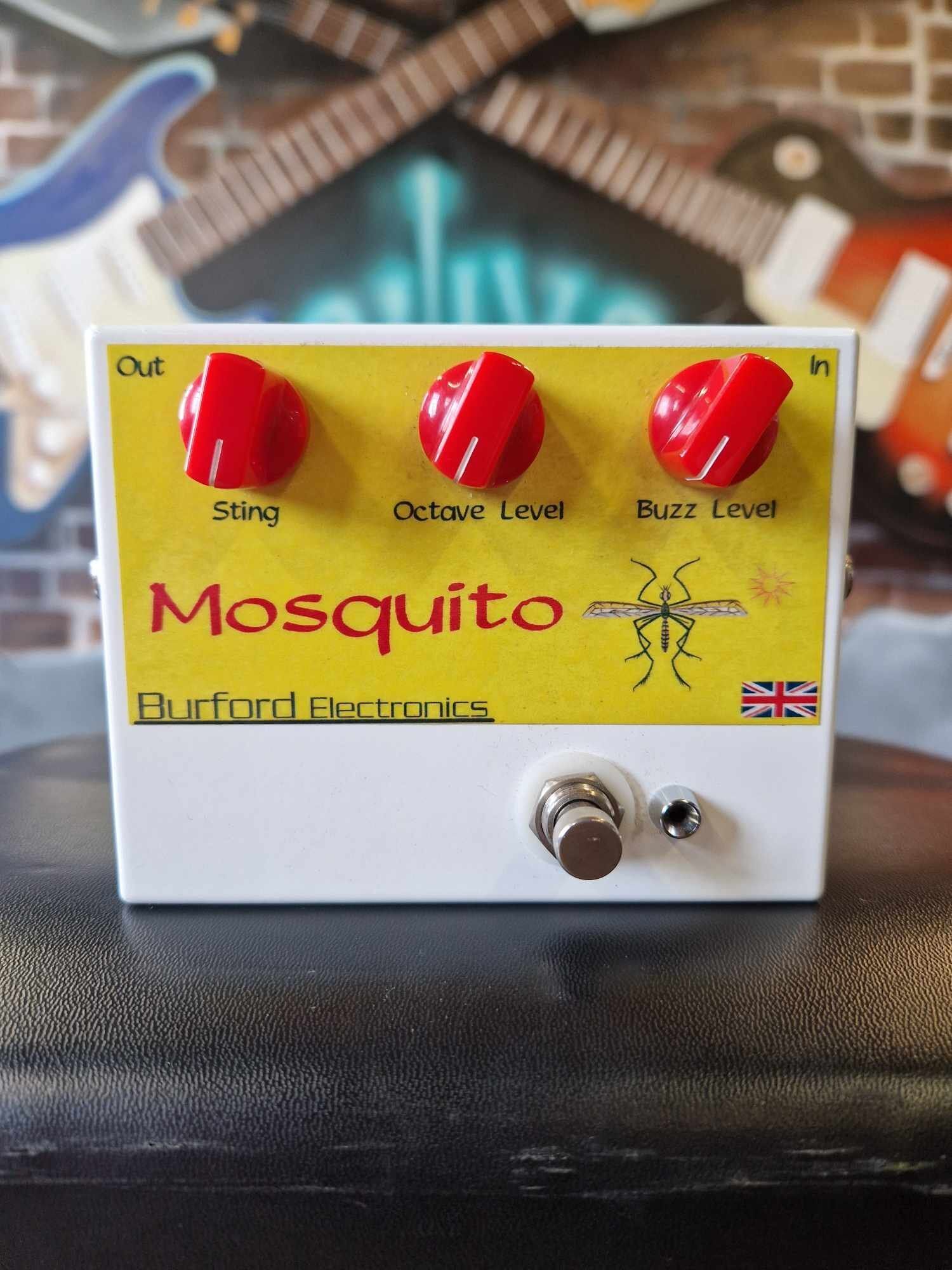
Burford Electronics Mosquito Fuzz Pedal Original - RefurbishedThis is a Burford Electronics Mosquito Fuzz Pedal. The Mosquito is a Fuzz/Octave pedal with a pretty unique sound, being closer to a fuzz more than a distortion this pedal delivers high octane fuzz sounds that will leave a sting. Here's what Burford Electronics say about the Mosquito Pedal: “A unique Octave up fuzz, which will give you pure fuzz on one twist of a knob & octave fuzz on one twist of another knob. So you can have your fuzz setting for a rich body & add octave fuzz to it or turn the fuzz down & just use the octave fuzz control for cutting lead. There is also a control called Sting, this is a tone filter that alters the voice of the octave from sharp to mellow. The octave is not over the top, on the lower register it is quite subtle, you can even play power chords and it holds together extremely well. Without that horrible modulation that is associated with some analogue octave up pedals, even some of the legendary expensive ones. Try soloing somewhere from the 8th fret upwards, it is very responsive and particularly so around 12th/15th fret and even higher. Neck and back pick ups give different sounds. Even playing positions will give different responses.”120,00 £*Shipping: 0,00 £Secure redirect to the provider
-
How do you conjugate the verbs être or avoir?
To conjugate the verb "être" (to be) in French, you would say: - Je suis (I am) - Tu es (You are) - Il/Elle/On est (He/She/One is) - Nous sommes (We are) - Vous êtes (You are) - Ils/Elles sont (They are) To conjugate the verb "avoir" (to have) in French, you would say: - J'ai (I have) - Tu as (You have) - Il/Elle/On a (He/She/One has) - Nous avons (We have) - Vous avez (You have) - Ils/Elles ont (They have) **
-
What is a sentence with 'être d' in it?
Il est important d'être à l'heure pour la réunion. **
-
Is it in the passé composé être or avoir?
The choice between être and avoir in the passé composé depends on the main verb being used. In general, verbs that express a change in state or motion, such as aller (to go), venir (to come), and partir (to leave), use être as the auxiliary verb. Verbs that do not express a change in state or motion, such as manger (to eat), boire (to drink), and parler (to speak), use avoir as the auxiliary verb. It's important to learn the specific verbs that use être and avoir in the passé composé to use them correctly. **
-
How do I know if it's être or avoir?
In French, the choice between "être" (to be) and "avoir" (to have) as auxiliary verbs depends on the main verb in the sentence. Generally, "être" is used with intransitive verbs that indicate a state or condition, such as "aller" (to go) or "venir" (to come), while "avoir" is used with transitive verbs that indicate an action, such as "manger" (to eat) or "regarder" (to watch). However, there are some exceptions, so it's important to learn the specific verbs that require "être" as their auxiliary. Additionally, reflexive verbs always use "être" as their auxiliary. **
* All prices are inclusive of VAT and, if applicable, plus shipping costs. The offer information is based on the details provided by the respective shop and is updated through automated processes. Real-time updates do not occur, so deviations can occur in individual cases. ** Note: Parts of this content were created by AI.