Buy 61.eu ?
We are moving the project
61.eu .
Are you interested in purchasing the domain
61.eu ?
domain@kv-gmbh.de · 0541-91531010
Buy 61.eu ?
Are 61 keys enough for a beginner on a piano, keyboard, or keyboard?
Yes, 61 keys are generally considered enough for a beginner on a piano, keyboard, or digital piano. Most beginner pieces can be played within the range of 61 keys, and it provides a good foundation for learning basic techniques and music theory. As beginners progress, they may find the need for a larger keyboard with more keys to play more advanced pieces that require a wider range. **
Do 61 keys suffice for a beginner on a piano, keyboard, or keyboard?
Yes, 61 keys are generally sufficient for a beginner on a piano, keyboard, or digital piano. Most beginner pieces can be played within the range of 61 keys, and it provides a good foundation for learning basic techniques and music theory. As the beginner progresses and explores more advanced repertoire, they may find the need for a larger keyboard with more keys to accommodate a wider range of music. **


Similar search terms for Keyboard
Top-Angebote
Products related to Keyboard:
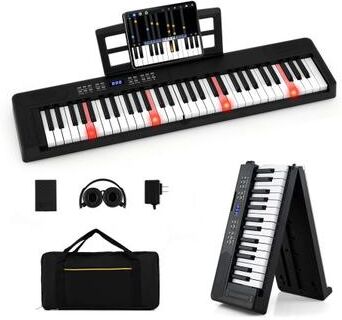

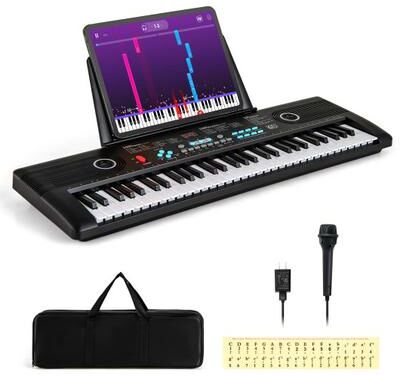
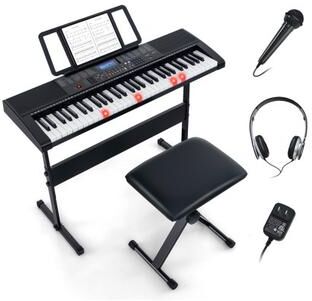
-
Is a 61-key keyboard sufficient for beginners?
Yes, a 61-key keyboard is sufficient for beginners as it provides enough keys to learn and practice basic piano skills and techniques. It covers a wide range of notes and allows beginners to play a variety of music. As beginners progress and develop their skills, they may eventually want to upgrade to a full-sized 88-key keyboard for a more advanced playing experience. **
-
How do you label a 61-key keyboard piano?
To label a 61-key keyboard piano, you can start by identifying the white keys as C, D, E, F, G, A, and B. Then, label the black keys as the sharp or flat notes between these white keys. You can use stickers or labels with the note names written on them to make it easier to identify the keys while playing or learning. Additionally, you can use a piano key chart or diagram as a reference to help you accurately label each key on the keyboard. **
-
How many keys does a 61-key keyboard have?
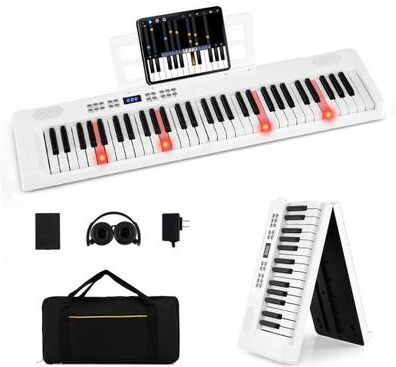
A 61-key keyboard has 61 keys in total. These keys include white keys and black keys, which together make up the standard layout of a piano keyboard. The 61-key keyboard is a popular choice for beginners and intermediate players due to its compact size and versatility. **
-
How can one label a keyboard with 61 keys?
One can label a keyboard with 61 keys by using adhesive labels or stickers with the corresponding letters, numbers, and symbols. These labels can be carefully placed on each key to ensure they are easily visible and do not interfere with typing. Additionally, one can use a label maker to create custom labels for each key. It's important to take care when applying the labels to ensure they are aligned properly and do not impede the functionality of the keys. **
What does an electronics technician specializing in information and communication technology earn?
An electronics technician specializing in information and communication technology can earn an average salary of around $60,000 to $80,000 per year, depending on factors such as experience, location, and employer. With additional certifications or advanced degrees, they may be able to command higher salaries. Overall, this field offers competitive wages and opportunities for career growth as technology continues to advance. **
How much does an electronics technician for information and communication technology earn?
The salary of an electronics technician for information and communication technology can vary depending on factors such as experience, location, and employer. On average, in the United States, an electronics technician in this field can earn between $40,000 to $70,000 per year. However, with more experience and specialized skills, technicians can earn higher salaries, potentially exceeding $80,000 annually. It's important to research specific companies and regions to get a more accurate idea of salary expectations. **
Top-Angebote
Products related to Keyboard:
-
HP USB SmartCard Keyboard – UK Layout (QWERTY) – Wired Security KeyboardOverview The HP USB SmartCard Keyboard combines comfortable typing with advanced smart card security, making it the ideal solution for professional, government, and enterprise users. Designed in a UK QWERTY layout , this full-sized wired keyboard offers seamless integration with HP and third-party systems that require two-factor authentication , identity protection, or secure logins—ensuring your data stays safe without compromising on productivity. Key Features Integrated Smart Card Reader – Supports secure logins, access control, and authentication UK QWERTY Layout – Full-size keyboard with number pad for efficient data entry USB Wired Connection – Reliable, plug-and-play connectivity without the need for drivers Government-Grade Security – Ideal for agencies and enterprises requiring CAC, PIV, or other smart card access Ergonomic Design – Quiet keys with a low-profile layout for comfortable long-term use Compatible with Windows & SmartCard Middleware – Works with most enterprise security applications HP Business-Class Reliability – Built with quality materials for heavy-duty office use Long USB Cable – Flexible placement for desktop setups Benefits The HP USB SmartCard Keyboard enables users to implement secure two-factor authentication through the integrated card reader—helping reduce fraud, enforce access control, and meet compliance standards. Ideal for businesses handling sensitive data, healthcare professionals, IT administrators, and financial services, this keyboard protects both login credentials and transmitted data, while maintaining a comfortable and professional typing experience. Specifications Specification Details Model HP USB SmartCard Keyboard Layout UK QWERTY Interface USB-A (Wired) Smart Card Compatibility ISO 7816, CAC, PIV, Java Card, and more Cable Length Approx. 1.8 metres Keys Full-size, low-profile membrane keys OS Compatibility Windows 10/11, Windows Server, ThinPro, Linux Security Protocols Two-factor authentication, secure sign-in Dimensions Approx. 460 x 165 x 30 mm Weight Approx. 900g Colour Black27,94 £*Shipping: 0,00 £Secure redirect to the provider
-
Are 61 keys enough for a beginner on a piano, keyboard, or keyboard?
Yes, 61 keys are generally considered enough for a beginner on a piano, keyboard, or digital piano. Most beginner pieces can be played within the range of 61 keys, and it provides a good foundation for learning basic techniques and music theory. As beginners progress, they may find the need for a larger keyboard with more keys to play more advanced pieces that require a wider range. **
-
Do 61 keys suffice for a beginner on a piano, keyboard, or keyboard?
Yes, 61 keys are generally sufficient for a beginner on a piano, keyboard, or digital piano. Most beginner pieces can be played within the range of 61 keys, and it provides a good foundation for learning basic techniques and music theory. As the beginner progresses and explores more advanced repertoire, they may find the need for a larger keyboard with more keys to accommodate a wider range of music. **
-
Is a 61-key keyboard sufficient for beginners?
Yes, a 61-key keyboard is sufficient for beginners as it provides enough keys to learn and practice basic piano skills and techniques. It covers a wide range of notes and allows beginners to play a variety of music. As beginners progress and develop their skills, they may eventually want to upgrade to a full-sized 88-key keyboard for a more advanced playing experience. **
-
How do you label a 61-key keyboard piano?
To label a 61-key keyboard piano, you can start by identifying the white keys as C, D, E, F, G, A, and B. Then, label the black keys as the sharp or flat notes between these white keys. You can use stickers or labels with the note names written on them to make it easier to identify the keys while playing or learning. Additionally, you can use a piano key chart or diagram as a reference to help you accurately label each key on the keyboard. **
Similar search terms for Keyboard
-
How many keys does a 61-key keyboard have?
A 61-key keyboard has 61 keys in total. These keys include white keys and black keys, which together make up the standard layout of a piano keyboard. The 61-key keyboard is a popular choice for beginners and intermediate players due to its compact size and versatility. **
-
How can one label a keyboard with 61 keys?
One can label a keyboard with 61 keys by using adhesive labels or stickers with the corresponding letters, numbers, and symbols. These labels can be carefully placed on each key to ensure they are easily visible and do not interfere with typing. Additionally, one can use a label maker to create custom labels for each key. It's important to take care when applying the labels to ensure they are aligned properly and do not impede the functionality of the keys. **
-
What does an electronics technician specializing in information and communication technology earn?
An electronics technician specializing in information and communication technology can earn an average salary of around $60,000 to $80,000 per year, depending on factors such as experience, location, and employer. With additional certifications or advanced degrees, they may be able to command higher salaries. Overall, this field offers competitive wages and opportunities for career growth as technology continues to advance. **
-
How much does an electronics technician for information and communication technology earn?
The salary of an electronics technician for information and communication technology can vary depending on factors such as experience, location, and employer. On average, in the United States, an electronics technician in this field can earn between $40,000 to $70,000 per year. However, with more experience and specialized skills, technicians can earn higher salaries, potentially exceeding $80,000 annually. It's important to research specific companies and regions to get a more accurate idea of salary expectations. **
* All prices are inclusive of VAT and, if applicable, plus shipping costs. The offer information is based on the details provided by the respective shop and is updated through automated processes. Real-time updates do not occur, so deviations can occur in individual cases. ** Note: Parts of this content were created by AI.