Buy 61.eu ?
We are moving the project
61.eu .
Are you interested in purchasing the domain
61.eu ?
domain@kv-gmbh.de · 0541-91531010
Buy 61.eu ?
On what paper are state treaties printed?
State treaties are typically printed on high-quality, archival paper to ensure their longevity and preservation. This paper is often acid-free and made from natural fibers to prevent deterioration over time. The use of such paper reflects the importance and significance of state treaties as legal and historical documents. **
What were the positions of the Locarno Treaties?
The Locarno Treaties, signed in 1925, aimed to secure post-World War I peace in Europe. The main positions of the treaties were to guarantee the existing borders between France, Belgium, and Germany, and to establish a new eastern border of Germany with Poland. Additionally, the treaties sought to promote mutual understanding and cooperation between the signatory countries, and to create a framework for resolving disputes through peaceful means. The treaties were seen as a significant step towards stabilizing the political situation in Europe and reducing the risk of future conflicts. **


Similar search terms for Treaties
Top-Angebote
Products related to Treaties:
-
iFixit Essential Electronics ToolkitThe iFixit Essential Electronics Toolkit is a compact starter repair kit for phones, tablets, laptops, game consoles and other small electronics. It includes a precision bit driver with 16 precision bits plus the basic opening and prying tools needed for common repairs such as screen and battery replacements.40,99 £*Shipping: 0,00 £Secure redirect to the provider
-
HARPERCOLLINS Creative Confidence by Tom & David Kelley – Unleashing Your Creative Potential & Innovation MindsetA powerful and inspiring book from the founders of IDEO, the award-winning design firm, on unleashing the creativity that lies within each and every one of us. Too often, companies and individuals assume that creativity and innovation are the domain of the ‘creative types’. But two of the foremost experts in innovation, design and creativity on the planet show us that each and every one of us is creative. In an entertaining and inspiring narrative that draws on countless stories from their work at IDEO, and with many of the world's top companies and design firms, David and Tom Kelley identify the principles and strategies that will allow us to tap into our creative potential in our work lives, and in our personal lives, allow us to think outside the box in terms of how we approach and solve problems. ‘Creative Confidence’ is a book that will help each of us be more productive and successful in our lives and in our careers.4,95 £*Shipping: 1,99 £Secure redirect to the provider




-
What led to the end of the Locarno Treaties?
The end of the Locarno Treaties can be attributed to several factors. One of the main reasons was the rise of Adolf Hitler and the Nazi party in Germany, which led to a shift in German foreign policy and a desire to revise the terms of the treaties. Additionally, the failure of the international community to effectively respond to German rearmament and expansionist policies further undermined the stability and effectiveness of the treaties. The remilitarization of the Rhineland by Germany in 1936 directly violated the terms of the Locarno Treaties and effectively marked their end. **
-
What is the difference between the two state treaties?
The two-state treaties refer to agreements between two sovereign states. The main difference between the two state treaties lies in their scope and subject matter. Bilateral treaties are agreements between two states, while multilateral treaties involve three or more states. Additionally, bilateral treaties tend to focus on specific issues between the two states, such as trade, extradition, or defense, while multilateral treaties address broader issues that affect multiple states, such as human rights, environmental protection, or arms control. **
-
Why did Hitler only conclude bilateral and not multilateral treaties?
Hitler only concluded bilateral treaties because he wanted to maintain maximum flexibility and control over his foreign policy. By negotiating one-on-one with individual countries, he could tailor the terms of the treaties to best serve his own interests and avoid being constrained by the obligations of multilateral agreements. Additionally, bilateral treaties allowed Hitler to exploit divisions and rivalries among other countries, playing them off against each other to his advantage. This approach also allowed him to pursue his aggressive expansionist goals without having to seek consensus or approval from a larger group of nations. **
-
What are the main provisions of the Treaties of Rapallo and Locarno?
The Treaties of Rapallo, signed in 1922 between Germany and the Soviet Union, established diplomatic and economic relations between the two countries. It also allowed for military cooperation, which helped both countries circumvent the restrictions of the Treaty of Versailles. On the other hand, the Locarno Treaties, signed in 1925, aimed to secure post-World War I territorial settlements in Western Europe. It guaranteed the borders between Germany, France, and Belgium, and promoted a spirit of reconciliation and cooperation in the region. **

What are the three most important Ostpolitik treaties of the Brandt government?
The three most important Ostpolitik treaties of the Brandt government were the Treaty of Moscow (1970), the Treaty of Warsaw (1970), and the Four Power Agreement on Berlin (1971). The Treaty of Moscow recognized the Oder-Neisse line as the official border between Germany and Poland, marking a significant step towards reconciliation and normalization of relations between the two countries. The Treaty of Warsaw reaffirmed the border and committed both countries to peaceful coexistence and cooperation. The Four Power Agreement on Berlin helped to ease tensions in the divided city and improve communication and travel between East and West Berlin. These treaties were crucial in fostering a new era of detente and cooperation between East and West Germany and their neighboring countries. **
In your opinion, are the treaties of the First World War justified?
In my opinion, the treaties of the First World War were not entirely justified. The Treaty of Versailles, in particular, imposed harsh and punitive terms on Germany, which many historians argue contributed to the rise of Adolf Hitler and the outbreak of the Second World War. Additionally, the treaties did not fully address the underlying causes of the war, such as nationalism and imperialism, and failed to establish a lasting peace in Europe. While it was important to hold the aggressor nations accountable for their actions, the treaties ultimately created conditions that led to further conflict rather than promoting long-term stability. **
Top-Angebote
Products related to Treaties:
-
All Categories Goods LED Solar Security Light Dual Motion Sensor Outdoor Floodlight With LED Technology For Energy Efficient Illumination LED Solar Security Light Dual Motion Sensor Outdoor Floodlight With LED Technology For Energy Efficient IlluminationBrighten your outdoor space with the 1 pcs of 22 LED Solar Security Light, designed for maximum visibility and security. Powered by ecofriendly solar energy, this motion sensor floodlight activates when movement is detected, offering both...63,97 $*Shipping: 0,00 $Secure redirect to the provider
-
iFixit Essential Electronics ToolkitThe iFixit Essential Electronics Toolkit is a compact starter repair kit for phones, tablets, laptops, game consoles and other small electronics. It includes a precision bit driver with 16 precision bits plus the basic opening and prying tools needed for common repairs such as screen and battery replacements.40,99 £*Shipping: 0,00 £Secure redirect to the provider
-
On what paper are state treaties printed?
State treaties are typically printed on high-quality, archival paper to ensure their longevity and preservation. This paper is often acid-free and made from natural fibers to prevent deterioration over time. The use of such paper reflects the importance and significance of state treaties as legal and historical documents. **
-
What were the positions of the Locarno Treaties?
The Locarno Treaties, signed in 1925, aimed to secure post-World War I peace in Europe. The main positions of the treaties were to guarantee the existing borders between France, Belgium, and Germany, and to establish a new eastern border of Germany with Poland. Additionally, the treaties sought to promote mutual understanding and cooperation between the signatory countries, and to create a framework for resolving disputes through peaceful means. The treaties were seen as a significant step towards stabilizing the political situation in Europe and reducing the risk of future conflicts. **
-
What led to the end of the Locarno Treaties?
The end of the Locarno Treaties can be attributed to several factors. One of the main reasons was the rise of Adolf Hitler and the Nazi party in Germany, which led to a shift in German foreign policy and a desire to revise the terms of the treaties. Additionally, the failure of the international community to effectively respond to German rearmament and expansionist policies further undermined the stability and effectiveness of the treaties. The remilitarization of the Rhineland by Germany in 1936 directly violated the terms of the Locarno Treaties and effectively marked their end. **
-
What is the difference between the two state treaties?
The two-state treaties refer to agreements between two sovereign states. The main difference between the two state treaties lies in their scope and subject matter. Bilateral treaties are agreements between two states, while multilateral treaties involve three or more states. Additionally, bilateral treaties tend to focus on specific issues between the two states, such as trade, extradition, or defense, while multilateral treaties address broader issues that affect multiple states, such as human rights, environmental protection, or arms control. **
Similar search terms for Treaties
-
HARPERCOLLINS Creative Confidence by Tom & David Kelley – Unleashing Your Creative Potential & Innovation MindsetA powerful and inspiring book from the founders of IDEO, the award-winning design firm, on unleashing the creativity that lies within each and every one of us. Too often, companies and individuals assume that creativity and innovation are the domain of the ‘creative types’. But two of the foremost experts in innovation, design and creativity on the planet show us that each and every one of us is creative. In an entertaining and inspiring narrative that draws on countless stories from their work at IDEO, and with many of the world's top companies and design firms, David and Tom Kelley identify the principles and strategies that will allow us to tap into our creative potential in our work lives, and in our personal lives, allow us to think outside the box in terms of how we approach and solve problems. ‘Creative Confidence’ is a book that will help each of us be more productive and successful in our lives and in our careers.4,95 £*Shipping: 1,99 £Secure redirect to the provider
-
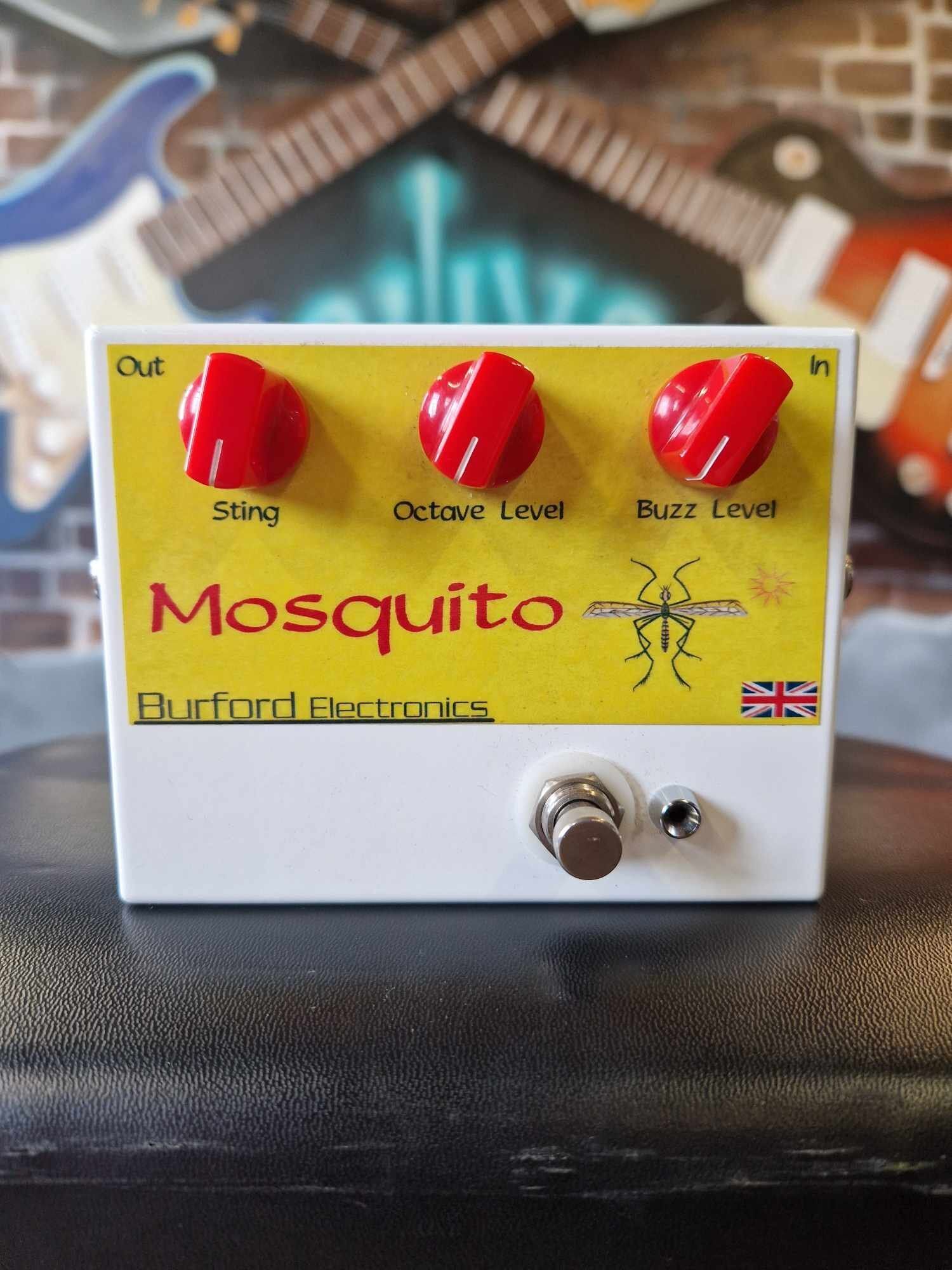
Burford Electronics Mosquito Fuzz Pedal Original - RefurbishedThis is a Burford Electronics Mosquito Fuzz Pedal. The Mosquito is a Fuzz/Octave pedal with a pretty unique sound, being closer to a fuzz more than a distortion this pedal delivers high octane fuzz sounds that will leave a sting. Here's what Burford Electronics say about the Mosquito Pedal: “A unique Octave up fuzz, which will give you pure fuzz on one twist of a knob & octave fuzz on one twist of another knob. So you can have your fuzz setting for a rich body & add octave fuzz to it or turn the fuzz down & just use the octave fuzz control for cutting lead. There is also a control called Sting, this is a tone filter that alters the voice of the octave from sharp to mellow. The octave is not over the top, on the lower register it is quite subtle, you can even play power chords and it holds together extremely well. Without that horrible modulation that is associated with some analogue octave up pedals, even some of the legendary expensive ones. Try soloing somewhere from the 8th fret upwards, it is very responsive and particularly so around 12th/15th fret and even higher. Neck and back pick ups give different sounds. Even playing positions will give different responses.”120,00 £*Shipping: 0,00 £Secure redirect to the provider
-
EUkeonjinn Round Wall Mirror Clear 61 cm x 61 cm26-45W output power, 192 LEDs/m high-density light strip with 6000K light temperature provide enough brightness 50,000 hours LED lifetime means it can last 45-46 years if using it 3 hours a day 0.2mm PVC shatterproof film prevents debris splashing after mirror break 10%-100% Step-less adjustment brightness to meet different brightness needs The memory function will remember your brightness setting when restart The IP45 rating for dust and water resistance ensures safe use in wet environments The 5mm silver mirror is not easy to oxidize, rust or blacken, and is more environmentally friendly and durable The high-definition mirror provides a 1:1 reflection that illuminates your beauty Anti-fog function & 1-hour delayed shut-off automatically The backlit CRI >90 Ra, close to natural light 2 Touch buttons control the light and defog respectively Package with customized thick foam and sturdy corner guards in a carton box Comes with wall-mounted hardware, it will only take a few minutes to assemble CSA certification: No, Weight Capacity: 158.8kg EUkeonjinn Size: 61 cm x 61 cm145,99 £*Shipping: 0,00 £Secure redirect to the provider
-
Why did Hitler only conclude bilateral and not multilateral treaties?
Hitler only concluded bilateral treaties because he wanted to maintain maximum flexibility and control over his foreign policy. By negotiating one-on-one with individual countries, he could tailor the terms of the treaties to best serve his own interests and avoid being constrained by the obligations of multilateral agreements. Additionally, bilateral treaties allowed Hitler to exploit divisions and rivalries among other countries, playing them off against each other to his advantage. This approach also allowed him to pursue his aggressive expansionist goals without having to seek consensus or approval from a larger group of nations. **
-
What are the main provisions of the Treaties of Rapallo and Locarno?
The Treaties of Rapallo, signed in 1922 between Germany and the Soviet Union, established diplomatic and economic relations between the two countries. It also allowed for military cooperation, which helped both countries circumvent the restrictions of the Treaty of Versailles. On the other hand, the Locarno Treaties, signed in 1925, aimed to secure post-World War I territorial settlements in Western Europe. It guaranteed the borders between Germany, France, and Belgium, and promoted a spirit of reconciliation and cooperation in the region. **
-
What are the three most important Ostpolitik treaties of the Brandt government?
The three most important Ostpolitik treaties of the Brandt government were the Treaty of Moscow (1970), the Treaty of Warsaw (1970), and the Four Power Agreement on Berlin (1971). The Treaty of Moscow recognized the Oder-Neisse line as the official border between Germany and Poland, marking a significant step towards reconciliation and normalization of relations between the two countries. The Treaty of Warsaw reaffirmed the border and committed both countries to peaceful coexistence and cooperation. The Four Power Agreement on Berlin helped to ease tensions in the divided city and improve communication and travel between East and West Berlin. These treaties were crucial in fostering a new era of detente and cooperation between East and West Germany and their neighboring countries. **
-
In your opinion, are the treaties of the First World War justified?
In my opinion, the treaties of the First World War were not entirely justified. The Treaty of Versailles, in particular, imposed harsh and punitive terms on Germany, which many historians argue contributed to the rise of Adolf Hitler and the outbreak of the Second World War. Additionally, the treaties did not fully address the underlying causes of the war, such as nationalism and imperialism, and failed to establish a lasting peace in Europe. While it was important to hold the aggressor nations accountable for their actions, the treaties ultimately created conditions that led to further conflict rather than promoting long-term stability. **
* All prices are inclusive of VAT and, if applicable, plus shipping costs. The offer information is based on the details provided by the respective shop and is updated through automated processes. Real-time updates do not occur, so deviations can occur in individual cases. ** Note: Parts of this content were created by AI.