Buy 61.eu ?
We are moving the project
61.eu .
Are you interested in purchasing the domain
61.eu ?
domain@kv-gmbh.de · 0541-91531010
Buy 61.eu ?
How do I calculate the angle of incidence?
To calculate the angle of incidence, you need to know the angle at which a ray of light or other electromagnetic wave strikes a surface. This angle is measured between the incident ray and the normal (perpendicular line) to the surface at the point of incidence. You can calculate the angle of incidence using the formula: angle of incidence = angle between incident ray and normal. This angle is typically measured in degrees. **
At what incidence rate do the schools close?
The schools close when the incidence rate of COVID-19 in the community reaches a certain threshold, which is determined by local health authorities and government regulations. This threshold can vary depending on the region and the specific guidelines in place. Generally, schools may close when the incidence rate rises to a level that is considered to pose a significant risk to the health and safety of students, staff, and the community. It is important for schools to closely monitor the incidence rate and follow the guidance of public health officials to make informed decisions about when to close. **
Similar search terms for Incidence
Top-Angebote
Products related to Incidence:
-
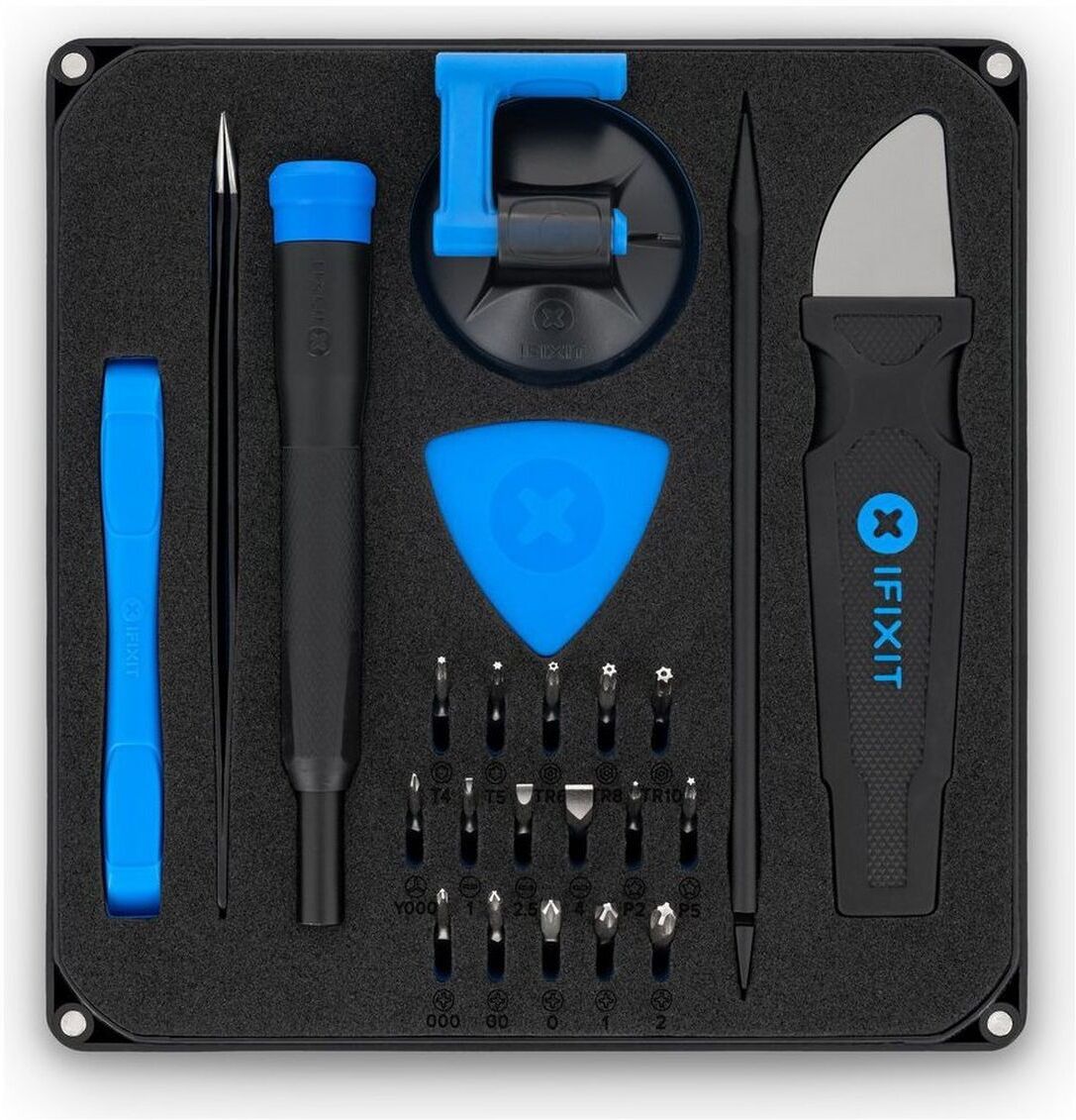
iFixit Essential Electronics ToolkitThe iFixit Essential Electronics Toolkit is a compact starter repair kit for phones, tablets, laptops, game consoles and other small electronics. It includes a precision bit driver with 16 precision bits plus the basic opening and prying tools needed for common repairs such as screen and battery replacements.40,99 £*Shipping: 0,00 £Secure redirect to the provider
-
HARPERCOLLINS Creative Confidence by Tom & David Kelley – Unleashing Your Creative Potential & Innovation MindsetA powerful and inspiring book from the founders of IDEO, the award-winning design firm, on unleashing the creativity that lies within each and every one of us. Too often, companies and individuals assume that creativity and innovation are the domain of the ‘creative types’. But two of the foremost experts in innovation, design and creativity on the planet show us that each and every one of us is creative. In an entertaining and inspiring narrative that draws on countless stories from their work at IDEO, and with many of the world's top companies and design firms, David and Tom Kelley identify the principles and strategies that will allow us to tap into our creative potential in our work lives, and in our personal lives, allow us to think outside the box in terms of how we approach and solve problems. ‘Creative Confidence’ is a book that will help each of us be more productive and successful in our lives and in our careers.4,95 £*Shipping: 1,99 £Secure redirect to the provider



-
How do you calculate the angle of incidence?
The angle of incidence is calculated by measuring the angle between the incident ray (the incoming light ray) and the normal (a line perpendicular to the surface at the point of incidence). This angle is typically measured in degrees using a protractor or other measuring tool. The angle of incidence is an important parameter in understanding how light interacts with surfaces, such as in the laws of reflection and refraction. **
-
How can the angle of incidence be calculated?
The angle of incidence can be calculated using the formula: angle of incidence = arctan(opposite/adjacent). This formula involves using the arctan function to find the angle whose tangent is equal to the ratio of the length of the side opposite the angle to the length of the side adjacent to the angle. This can be done using a scientific calculator or by using trigonometric tables. Alternatively, if the lengths of the sides of the triangle are known, the angle of incidence can be calculated using the inverse trigonometric functions such as arcsin, arccos, or arctan. **
-
What is the angle of incidence of the sun?
The angle of incidence of the sun refers to the angle at which sunlight strikes the Earth's surface. This angle varies depending on the time of day, location, and season. At solar noon, when the sun is at its highest point in the sky, the angle of incidence is 90 degrees, resulting in the most direct and intense sunlight. As the sun moves lower in the sky during sunrise and sunset, the angle of incidence decreases, leading to longer shadows and less intense sunlight. **
-
What is the relationship between temperatures and angle of incidence?
The relationship between temperatures and angle of incidence is that temperatures tend to be higher when the angle of incidence is more direct. This is because when sunlight hits the Earth's surface at a steeper angle, the energy is concentrated over a smaller area, leading to higher temperatures. On the other hand, when sunlight hits at a more shallow angle, the energy is spread out over a larger area, resulting in lower temperatures. Therefore, the angle of incidence plays a significant role in determining the temperature of a particular location. **
What is the angle of incidence of the sun's rays?
The angle of incidence of the sun's rays is the angle at which the sun's rays strike a surface. It is measured as the angle between the incoming rays of sunlight and a line perpendicular to the surface. The angle of incidence affects the amount of solar energy that is absorbed by the surface, with a higher angle of incidence resulting in more energy being absorbed. This angle changes throughout the day as the position of the sun in the sky changes. **
What is the independence of the incidence axioms in geometry?
The independence of the incidence axioms in geometry refers to the fact that each axiom is necessary for defining the concept of incidence, which is the relationship between points and lines. If any of the axioms were removed or altered, the entire system of geometry would be affected, leading to a different set of geometric properties and theorems. This independence highlights the interconnectedness of the axioms and their essential role in defining the fundamental concepts of geometry. **
Top-Angebote
Products related to Incidence:
-
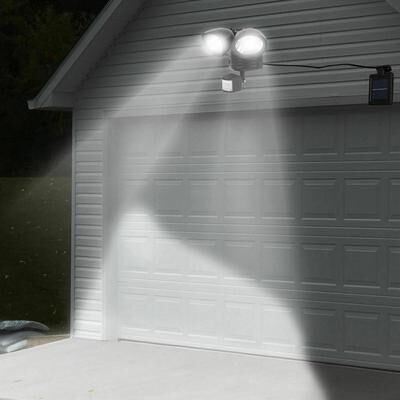
All Categories Goods LED Solar Security Light Dual Motion Sensor Outdoor Floodlight With LED Technology For Energy Efficient Illumination LED Solar Security Light Dual Motion Sensor Outdoor Floodlight With LED Technology For Energy Efficient IlluminationBrighten your outdoor space with the 1 pcs of 22 LED Solar Security Light, designed for maximum visibility and security. Powered by ecofriendly solar energy, this motion sensor floodlight activates when movement is detected, offering both...63,97 $*Shipping: 0,00 $Secure redirect to the provider
-
iFixit Essential Electronics ToolkitThe iFixit Essential Electronics Toolkit is a compact starter repair kit for phones, tablets, laptops, game consoles and other small electronics. It includes a precision bit driver with 16 precision bits plus the basic opening and prying tools needed for common repairs such as screen and battery replacements.40,99 £*Shipping: 0,00 £Secure redirect to the provider
-
How do I calculate the angle of incidence?
To calculate the angle of incidence, you need to know the angle at which a ray of light or other electromagnetic wave strikes a surface. This angle is measured between the incident ray and the normal (perpendicular line) to the surface at the point of incidence. You can calculate the angle of incidence using the formula: angle of incidence = angle between incident ray and normal. This angle is typically measured in degrees. **
-
At what incidence rate do the schools close?
The schools close when the incidence rate of COVID-19 in the community reaches a certain threshold, which is determined by local health authorities and government regulations. This threshold can vary depending on the region and the specific guidelines in place. Generally, schools may close when the incidence rate rises to a level that is considered to pose a significant risk to the health and safety of students, staff, and the community. It is important for schools to closely monitor the incidence rate and follow the guidance of public health officials to make informed decisions about when to close. **
-
How do you calculate the angle of incidence?
The angle of incidence is calculated by measuring the angle between the incident ray (the incoming light ray) and the normal (a line perpendicular to the surface at the point of incidence). This angle is typically measured in degrees using a protractor or other measuring tool. The angle of incidence is an important parameter in understanding how light interacts with surfaces, such as in the laws of reflection and refraction. **
-
How can the angle of incidence be calculated?
The angle of incidence can be calculated using the formula: angle of incidence = arctan(opposite/adjacent). This formula involves using the arctan function to find the angle whose tangent is equal to the ratio of the length of the side opposite the angle to the length of the side adjacent to the angle. This can be done using a scientific calculator or by using trigonometric tables. Alternatively, if the lengths of the sides of the triangle are known, the angle of incidence can be calculated using the inverse trigonometric functions such as arcsin, arccos, or arctan. **
Similar search terms for Incidence
-
HARPERCOLLINS Creative Confidence by Tom & David Kelley – Unleashing Your Creative Potential & Innovation MindsetA powerful and inspiring book from the founders of IDEO, the award-winning design firm, on unleashing the creativity that lies within each and every one of us. Too often, companies and individuals assume that creativity and innovation are the domain of the ‘creative types’. But two of the foremost experts in innovation, design and creativity on the planet show us that each and every one of us is creative. In an entertaining and inspiring narrative that draws on countless stories from their work at IDEO, and with many of the world's top companies and design firms, David and Tom Kelley identify the principles and strategies that will allow us to tap into our creative potential in our work lives, and in our personal lives, allow us to think outside the box in terms of how we approach and solve problems. ‘Creative Confidence’ is a book that will help each of us be more productive and successful in our lives and in our careers.4,95 £*Shipping: 1,99 £Secure redirect to the provider
-
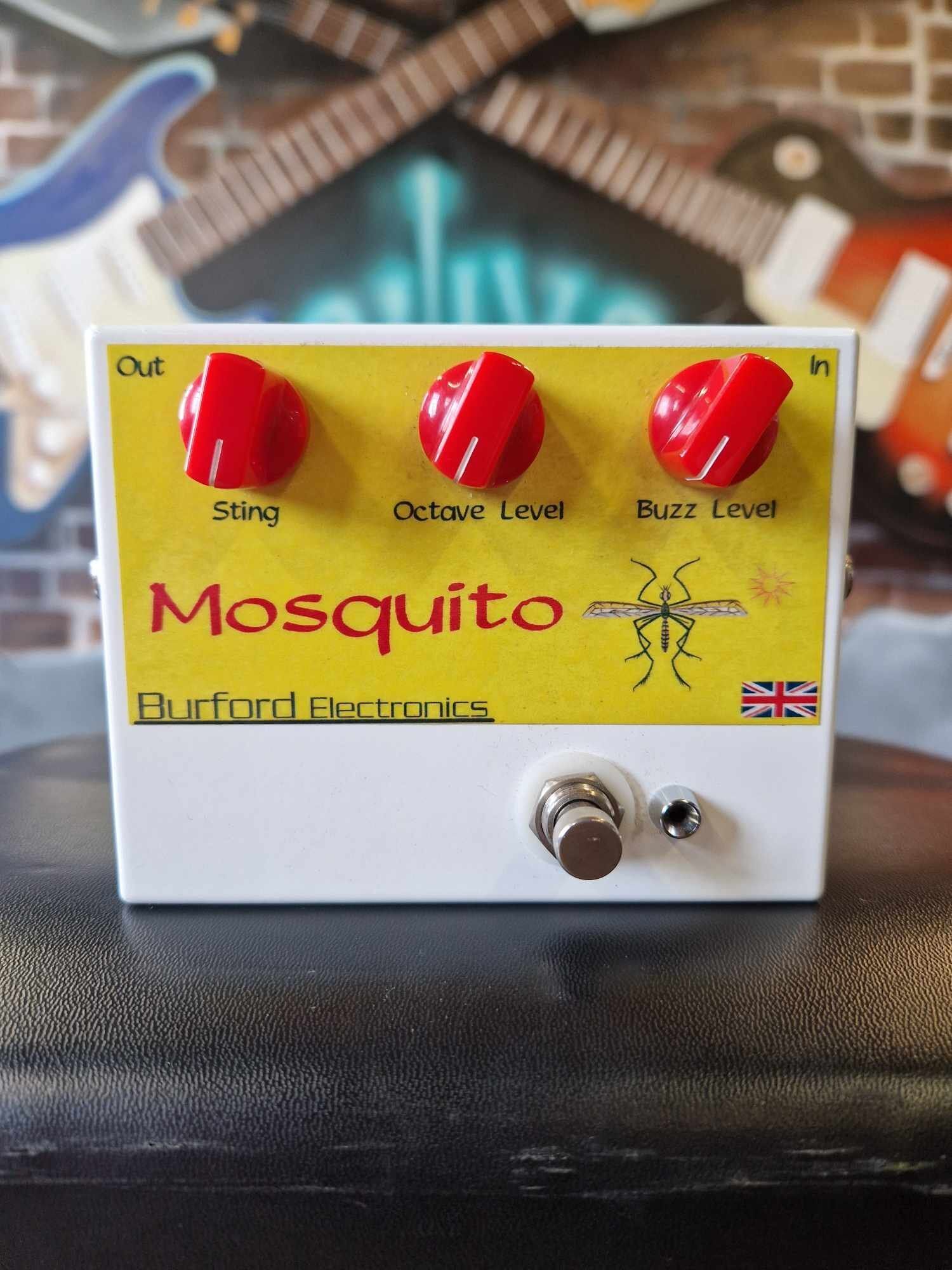
Burford Electronics Mosquito Fuzz Pedal Original - RefurbishedThis is a Burford Electronics Mosquito Fuzz Pedal. The Mosquito is a Fuzz/Octave pedal with a pretty unique sound, being closer to a fuzz more than a distortion this pedal delivers high octane fuzz sounds that will leave a sting. Here's what Burford Electronics say about the Mosquito Pedal: “A unique Octave up fuzz, which will give you pure fuzz on one twist of a knob & octave fuzz on one twist of another knob. So you can have your fuzz setting for a rich body & add octave fuzz to it or turn the fuzz down & just use the octave fuzz control for cutting lead. There is also a control called Sting, this is a tone filter that alters the voice of the octave from sharp to mellow. The octave is not over the top, on the lower register it is quite subtle, you can even play power chords and it holds together extremely well. Without that horrible modulation that is associated with some analogue octave up pedals, even some of the legendary expensive ones. Try soloing somewhere from the 8th fret upwards, it is very responsive and particularly so around 12th/15th fret and even higher. Neck and back pick ups give different sounds. Even playing positions will give different responses.”120,00 £*Shipping: 0,00 £Secure redirect to the provider
-
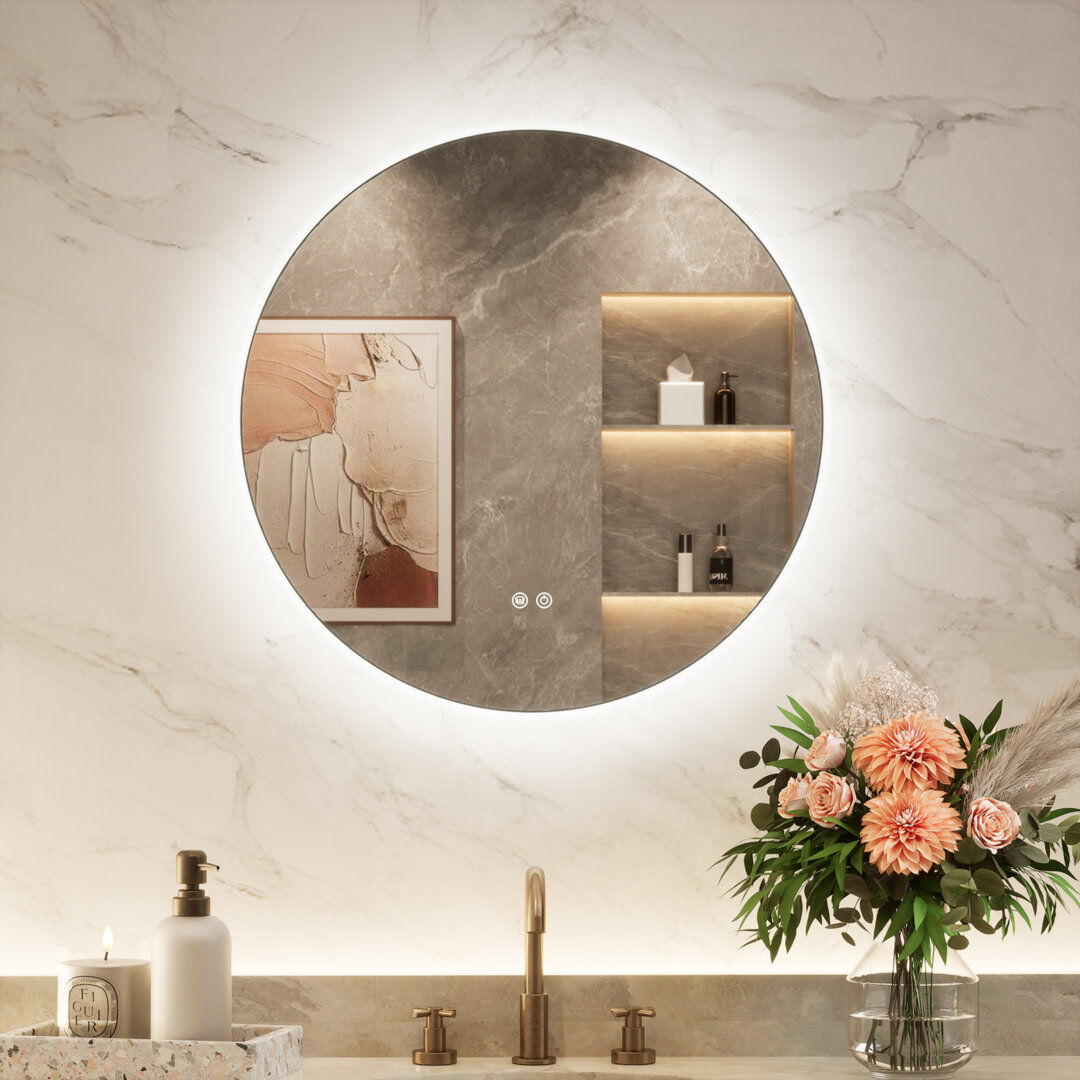
EUkeonjinn Round Wall Mirror Clear 61 cm x 61 cm26-45W output power, 192 LEDs/m high-density light strip with 6000K light temperature provide enough brightness 50,000 hours LED lifetime means it can last 45-46 years if using it 3 hours a day 0.2mm PVC shatterproof film prevents debris splashing after mirror break 10%-100% Step-less adjustment brightness to meet different brightness needs The memory function will remember your brightness setting when restart The IP45 rating for dust and water resistance ensures safe use in wet environments The 5mm silver mirror is not easy to oxidize, rust or blacken, and is more environmentally friendly and durable The high-definition mirror provides a 1:1 reflection that illuminates your beauty Anti-fog function & 1-hour delayed shut-off automatically The backlit CRI >90 Ra, close to natural light 2 Touch buttons control the light and defog respectively Package with customized thick foam and sturdy corner guards in a carton box Comes with wall-mounted hardware, it will only take a few minutes to assemble CSA certification: No, Weight Capacity: 158.8kg EUkeonjinn Size: 61 cm x 61 cm145,99 £*Shipping: 0,00 £Secure redirect to the provider
-
What is the angle of incidence of the sun?
The angle of incidence of the sun refers to the angle at which sunlight strikes the Earth's surface. This angle varies depending on the time of day, location, and season. At solar noon, when the sun is at its highest point in the sky, the angle of incidence is 90 degrees, resulting in the most direct and intense sunlight. As the sun moves lower in the sky during sunrise and sunset, the angle of incidence decreases, leading to longer shadows and less intense sunlight. **
-
What is the relationship between temperatures and angle of incidence?
The relationship between temperatures and angle of incidence is that temperatures tend to be higher when the angle of incidence is more direct. This is because when sunlight hits the Earth's surface at a steeper angle, the energy is concentrated over a smaller area, leading to higher temperatures. On the other hand, when sunlight hits at a more shallow angle, the energy is spread out over a larger area, resulting in lower temperatures. Therefore, the angle of incidence plays a significant role in determining the temperature of a particular location. **
-
What is the angle of incidence of the sun's rays?
The angle of incidence of the sun's rays is the angle at which the sun's rays strike a surface. It is measured as the angle between the incoming rays of sunlight and a line perpendicular to the surface. The angle of incidence affects the amount of solar energy that is absorbed by the surface, with a higher angle of incidence resulting in more energy being absorbed. This angle changes throughout the day as the position of the sun in the sky changes. **
-
What is the independence of the incidence axioms in geometry?
The independence of the incidence axioms in geometry refers to the fact that each axiom is necessary for defining the concept of incidence, which is the relationship between points and lines. If any of the axioms were removed or altered, the entire system of geometry would be affected, leading to a different set of geometric properties and theorems. This independence highlights the interconnectedness of the axioms and their essential role in defining the fundamental concepts of geometry. **
* All prices are inclusive of VAT and, if applicable, plus shipping costs. The offer information is based on the details provided by the respective shop and is updated through automated processes. Real-time updates do not occur, so deviations can occur in individual cases. ** Note: Parts of this content were created by AI.