Buy 61.eu ?
We are moving the project
61.eu .
Are you interested in purchasing the domain
61.eu ?
domain@kv-gmbh.de · 0541-91531010
Buy 61.eu ?
How do you focus a Galilean telescope?
To focus a Galilean telescope, you need to adjust the position of the eyepiece. Start by pointing the telescope at a distant object and then slowly turn the eyepiece in one direction or the other until the image comes into focus. You may need to make small adjustments until the image is clear and sharp. It's important to take your time and be patient when focusing a Galilean telescope to ensure you get the best possible view. **
What is an eyepiece on a Kepler and Galilean telescope?
The eyepiece on a Kepler and Galilean telescope is the lens or set of lenses located at the end of the telescope where the observer looks through. It is responsible for magnifying the image formed by the objective lens or mirror at the other end of the telescope. The design and placement of the eyepiece can affect the field of view, magnification, and overall image quality of the telescope. In both types of telescopes, the eyepiece is a crucial component for allowing the observer to see distant objects with greater clarity and detail. **

Similar search terms for Galilean
Top-Angebote
Products related to Galilean:
-
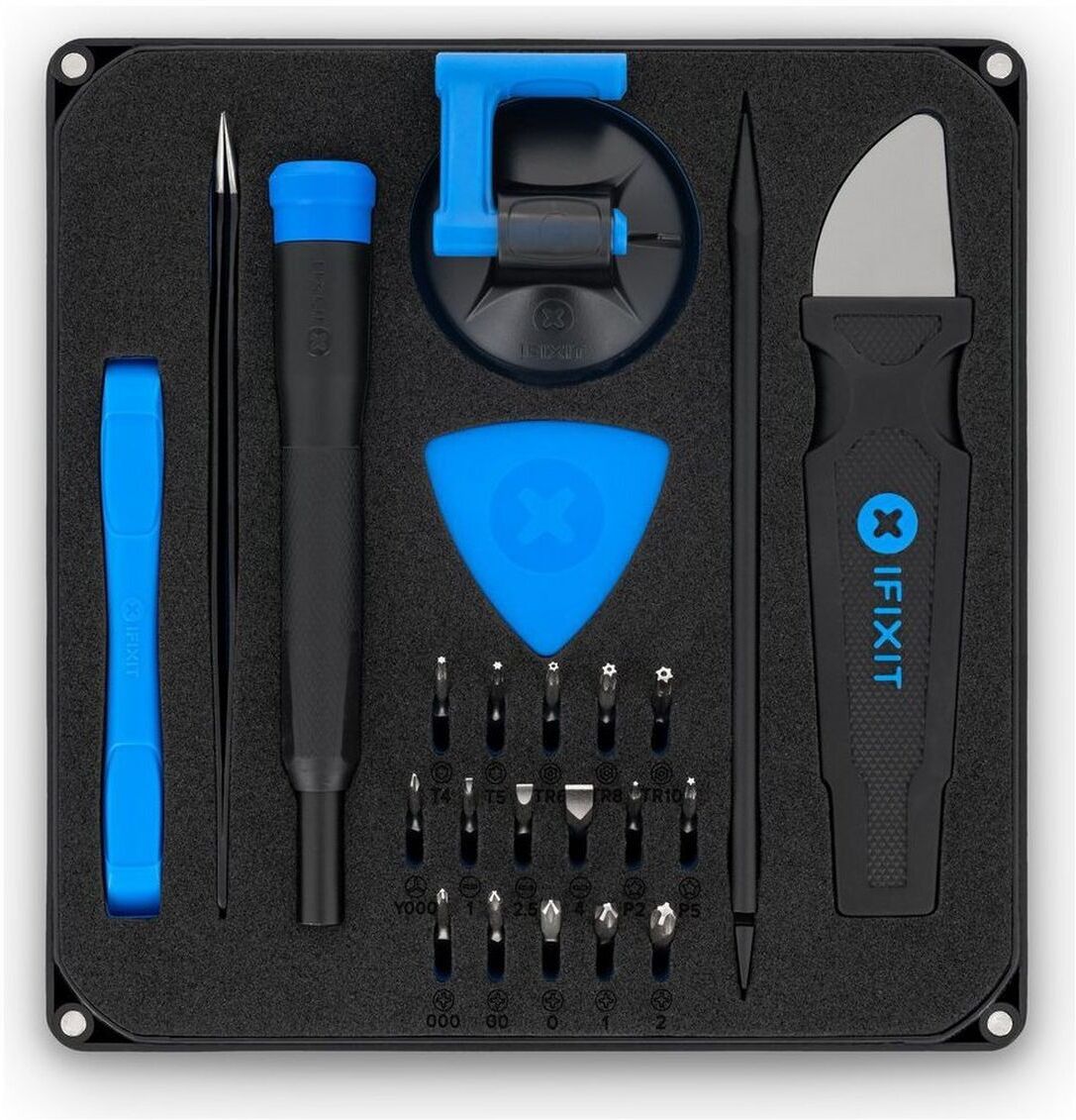
iFixit Essential Electronics ToolkitThe iFixit Essential Electronics Toolkit is a compact starter repair kit for phones, tablets, laptops, game consoles and other small electronics. It includes a precision bit driver with 16 precision bits plus the basic opening and prying tools needed for common repairs such as screen and battery replacements.40,99 £*Shipping: 0,00 £Secure redirect to the provider
-
HARPERCOLLINS Creative Confidence by Tom & David Kelley – Unleashing Your Creative Potential & Innovation MindsetA powerful and inspiring book from the founders of IDEO, the award-winning design firm, on unleashing the creativity that lies within each and every one of us. Too often, companies and individuals assume that creativity and innovation are the domain of the ‘creative types’. But two of the foremost experts in innovation, design and creativity on the planet show us that each and every one of us is creative. In an entertaining and inspiring narrative that draws on countless stories from their work at IDEO, and with many of the world's top companies and design firms, David and Tom Kelley identify the principles and strategies that will allow us to tap into our creative potential in our work lives, and in our personal lives, allow us to think outside the box in terms of how we approach and solve problems. ‘Creative Confidence’ is a book that will help each of us be more productive and successful in our lives and in our careers.4,95 £*Shipping: 1,99 £Secure redirect to the provider



-
Why is God also called the flying Galilean in professional circles?
God is sometimes referred to as the flying Galilean in professional circles because of the belief that He transcends physical limitations and is omnipresent. The term "flying" symbolizes His ability to be everywhere at once, moving swiftly and effortlessly. The term "Galilean" is a reference to Jesus Christ, who was from Galilee and is considered a central figure in Christianity. This nickname highlights the divine and miraculous nature attributed to God in various religious and philosophical contexts. **
-
What is the difference between a Galilean and an astronomical telescope?
The main difference between a Galilean and an astronomical telescope is the way they use lenses to magnify distant objects. In a Galilean telescope, there is a concave lens at the front and a convex lens at the eyepiece, while in an astronomical telescope, there are two convex lenses. Additionally, Galilean telescopes have a wider field of view but lower magnification compared to astronomical telescopes, which have a narrower field of view but higher magnification. Lastly, Galilean telescopes are typically used for terrestrial viewing, while astronomical telescopes are designed for viewing celestial objects. **
-
What is the difference between a prism binoculars and a Galilean binoculars?
The main difference between a prism binocular and a Galilean binocular is the optical design. Prism binoculars use prisms to correct the image orientation, resulting in a more compact design and better image quality. On the other hand, Galilean binoculars do not use prisms and have a simpler design, but they may have a narrower field of view and may not provide as sharp images as prism binoculars. Additionally, prism binoculars are typically more expensive than Galilean binoculars due to their more complex optical system. **
-
Does the resolution of a Kepler-Galilean telescope increase with increasing magnification?
No, the resolution of a Kepler-Galilean telescope does not necessarily increase with increasing magnification. While higher magnification can make objects appear larger and closer, it does not necessarily improve the clarity or sharpness of the image. In fact, increasing magnification without a corresponding increase in the quality of the optics can lead to a decrease in resolution due to factors like image distortion and blurriness. It is important to strike a balance between magnification and optical quality to achieve the best resolution in a telescope. **


What is the difference between a prism binocular and a Galilean binocular?
The main difference between a prism binocular and a Galilean binocular is the type of optical system they use. A prism binocular uses a complex system of prisms to correct the image and provide a wider field of view, making them larger and heavier. On the other hand, a Galilean binocular uses a simpler lens system, making them more compact and lightweight. Additionally, prism binoculars generally provide better image quality and brightness, while Galilean binoculars are more affordable and easier to carry. **
How can it be shown that a Galilean transformation forms a group?
A Galilean transformation can be shown to form a group by satisfying the four group axioms: closure, associativity, identity, and inverse. 1. Closure: The composition of two Galilean transformations is also a Galilean transformation, as the equations for the transformations can be combined and still result in a valid transformation. 2. Associativity: The composition of Galilean transformations is associative, meaning that (A*B)*C = A*(B*C) for any three transformations A, B, and C. 3. Identity: The identity transformation, which leaves all coordinates unchanged, is a member of the Galilean transformation group. 4. Inverse: For every Galilean transformation, there exists an inverse transformation that undoes the original transformation, ensuring that every transformation has an inverse within the group. Therefore, a Galilean transformation satisfies all the group axioms and forms a group. **
Top-Angebote
Products related to Galilean:
-
All Categories Goods LED Solar Security Light Dual Motion Sensor Outdoor Floodlight With LED Technology For Energy Efficient Illumination LED Solar Security Light Dual Motion Sensor Outdoor Floodlight With LED Technology For Energy Efficient IlluminationBrighten your outdoor space with the 1 pcs of 22 LED Solar Security Light, designed for maximum visibility and security. Powered by ecofriendly solar energy, this motion sensor floodlight activates when movement is detected, offering both...63,97 $*Shipping: 0,00 $Secure redirect to the provider
-
iFixit Essential Electronics ToolkitThe iFixit Essential Electronics Toolkit is a compact starter repair kit for phones, tablets, laptops, game consoles and other small electronics. It includes a precision bit driver with 16 precision bits plus the basic opening and prying tools needed for common repairs such as screen and battery replacements.40,99 £*Shipping: 0,00 £Secure redirect to the provider
-
How do you focus a Galilean telescope?
To focus a Galilean telescope, you need to adjust the position of the eyepiece. Start by pointing the telescope at a distant object and then slowly turn the eyepiece in one direction or the other until the image comes into focus. You may need to make small adjustments until the image is clear and sharp. It's important to take your time and be patient when focusing a Galilean telescope to ensure you get the best possible view. **
-
What is an eyepiece on a Kepler and Galilean telescope?
The eyepiece on a Kepler and Galilean telescope is the lens or set of lenses located at the end of the telescope where the observer looks through. It is responsible for magnifying the image formed by the objective lens or mirror at the other end of the telescope. The design and placement of the eyepiece can affect the field of view, magnification, and overall image quality of the telescope. In both types of telescopes, the eyepiece is a crucial component for allowing the observer to see distant objects with greater clarity and detail. **
-
Why is God also called the flying Galilean in professional circles?
God is sometimes referred to as the flying Galilean in professional circles because of the belief that He transcends physical limitations and is omnipresent. The term "flying" symbolizes His ability to be everywhere at once, moving swiftly and effortlessly. The term "Galilean" is a reference to Jesus Christ, who was from Galilee and is considered a central figure in Christianity. This nickname highlights the divine and miraculous nature attributed to God in various religious and philosophical contexts. **
-
What is the difference between a Galilean and an astronomical telescope?
The main difference between a Galilean and an astronomical telescope is the way they use lenses to magnify distant objects. In a Galilean telescope, there is a concave lens at the front and a convex lens at the eyepiece, while in an astronomical telescope, there are two convex lenses. Additionally, Galilean telescopes have a wider field of view but lower magnification compared to astronomical telescopes, which have a narrower field of view but higher magnification. Lastly, Galilean telescopes are typically used for terrestrial viewing, while astronomical telescopes are designed for viewing celestial objects. **
Similar search terms for Galilean
-
HARPERCOLLINS Creative Confidence by Tom & David Kelley – Unleashing Your Creative Potential & Innovation MindsetA powerful and inspiring book from the founders of IDEO, the award-winning design firm, on unleashing the creativity that lies within each and every one of us. Too often, companies and individuals assume that creativity and innovation are the domain of the ‘creative types’. But two of the foremost experts in innovation, design and creativity on the planet show us that each and every one of us is creative. In an entertaining and inspiring narrative that draws on countless stories from their work at IDEO, and with many of the world's top companies and design firms, David and Tom Kelley identify the principles and strategies that will allow us to tap into our creative potential in our work lives, and in our personal lives, allow us to think outside the box in terms of how we approach and solve problems. ‘Creative Confidence’ is a book that will help each of us be more productive and successful in our lives and in our careers.4,95 £*Shipping: 1,99 £Secure redirect to the provider
-
Burford Electronics Mosquito Fuzz Pedal Original - RefurbishedThis is a Burford Electronics Mosquito Fuzz Pedal. The Mosquito is a Fuzz/Octave pedal with a pretty unique sound, being closer to a fuzz more than a distortion this pedal delivers high octane fuzz sounds that will leave a sting. Here's what Burford Electronics say about the Mosquito Pedal: “A unique Octave up fuzz, which will give you pure fuzz on one twist of a knob & octave fuzz on one twist of another knob. So you can have your fuzz setting for a rich body & add octave fuzz to it or turn the fuzz down & just use the octave fuzz control for cutting lead. There is also a control called Sting, this is a tone filter that alters the voice of the octave from sharp to mellow. The octave is not over the top, on the lower register it is quite subtle, you can even play power chords and it holds together extremely well. Without that horrible modulation that is associated with some analogue octave up pedals, even some of the legendary expensive ones. Try soloing somewhere from the 8th fret upwards, it is very responsive and particularly so around 12th/15th fret and even higher. Neck and back pick ups give different sounds. Even playing positions will give different responses.”120,00 £*Shipping: 0,00 £Secure redirect to the provider
-
What is the difference between a prism binoculars and a Galilean binoculars?
The main difference between a prism binocular and a Galilean binocular is the optical design. Prism binoculars use prisms to correct the image orientation, resulting in a more compact design and better image quality. On the other hand, Galilean binoculars do not use prisms and have a simpler design, but they may have a narrower field of view and may not provide as sharp images as prism binoculars. Additionally, prism binoculars are typically more expensive than Galilean binoculars due to their more complex optical system. **
-
Does the resolution of a Kepler-Galilean telescope increase with increasing magnification?
No, the resolution of a Kepler-Galilean telescope does not necessarily increase with increasing magnification. While higher magnification can make objects appear larger and closer, it does not necessarily improve the clarity or sharpness of the image. In fact, increasing magnification without a corresponding increase in the quality of the optics can lead to a decrease in resolution due to factors like image distortion and blurriness. It is important to strike a balance between magnification and optical quality to achieve the best resolution in a telescope. **
-
What is the difference between a prism binocular and a Galilean binocular?
The main difference between a prism binocular and a Galilean binocular is the type of optical system they use. A prism binocular uses a complex system of prisms to correct the image and provide a wider field of view, making them larger and heavier. On the other hand, a Galilean binocular uses a simpler lens system, making them more compact and lightweight. Additionally, prism binoculars generally provide better image quality and brightness, while Galilean binoculars are more affordable and easier to carry. **
-
How can it be shown that a Galilean transformation forms a group?
A Galilean transformation can be shown to form a group by satisfying the four group axioms: closure, associativity, identity, and inverse. 1. Closure: The composition of two Galilean transformations is also a Galilean transformation, as the equations for the transformations can be combined and still result in a valid transformation. 2. Associativity: The composition of Galilean transformations is associative, meaning that (A*B)*C = A*(B*C) for any three transformations A, B, and C. 3. Identity: The identity transformation, which leaves all coordinates unchanged, is a member of the Galilean transformation group. 4. Inverse: For every Galilean transformation, there exists an inverse transformation that undoes the original transformation, ensuring that every transformation has an inverse within the group. Therefore, a Galilean transformation satisfies all the group axioms and forms a group. **
* All prices are inclusive of VAT and, if applicable, plus shipping costs. The offer information is based on the details provided by the respective shop and is updated through automated processes. Real-time updates do not occur, so deviations can occur in individual cases. ** Note: Parts of this content were created by AI.