Buy 61.eu ?
We are moving the project
61.eu .
Are you interested in purchasing the domain
61.eu ?
domain@kv-gmbh.de · 0541-91531010
Buy 61.eu ?
What is the etymology of Turkish Pepper?
The term "Turkish Pepper" is believed to have originated from the use of a specific type of pepper called "Urfa biber" in Turkish cuisine. Urfa biber is a dried red pepper that is grown in the Urfa region of Turkey and is known for its smoky, earthy flavor with a mild heat. The name "Turkish Pepper" likely refers to the origin of this specific type of pepper and its association with Turkish cuisine. **
What is the etymology of the word Funk?
The word "funk" originated in the late 17th century, derived from the French word "fumet," meaning "smell" or "vapor." It was initially used to describe a strong, musty smell. Over time, the term evolved to describe a style of music characterized by a strong rhythmic groove and soulful vocals, popularized in the 1960s and 1970s. Today, "funk" is associated with a genre of music that blends elements of soul, jazz, and rhythm and blues. **


Similar search terms for Etymology
Top-Angebote
Products related to Etymology:
-
HARPERCOLLINS Creative Confidence by Tom & David Kelley – Unleashing Your Creative Potential & Innovation MindsetA powerful and inspiring book from the founders of IDEO, the award-winning design firm, on unleashing the creativity that lies within each and every one of us. Too often, companies and individuals assume that creativity and innovation are the domain of the ‘creative types’. But two of the foremost experts in innovation, design and creativity on the planet show us that each and every one of us is creative. In an entertaining and inspiring narrative that draws on countless stories from their work at IDEO, and with many of the world's top companies and design firms, David and Tom Kelley identify the principles and strategies that will allow us to tap into our creative potential in our work lives, and in our personal lives, allow us to think outside the box in terms of how we approach and solve problems. ‘Creative Confidence’ is a book that will help each of us be more productive and successful in our lives and in our careers.4,95 £*Shipping: 1,99 £Secure redirect to the provider
-
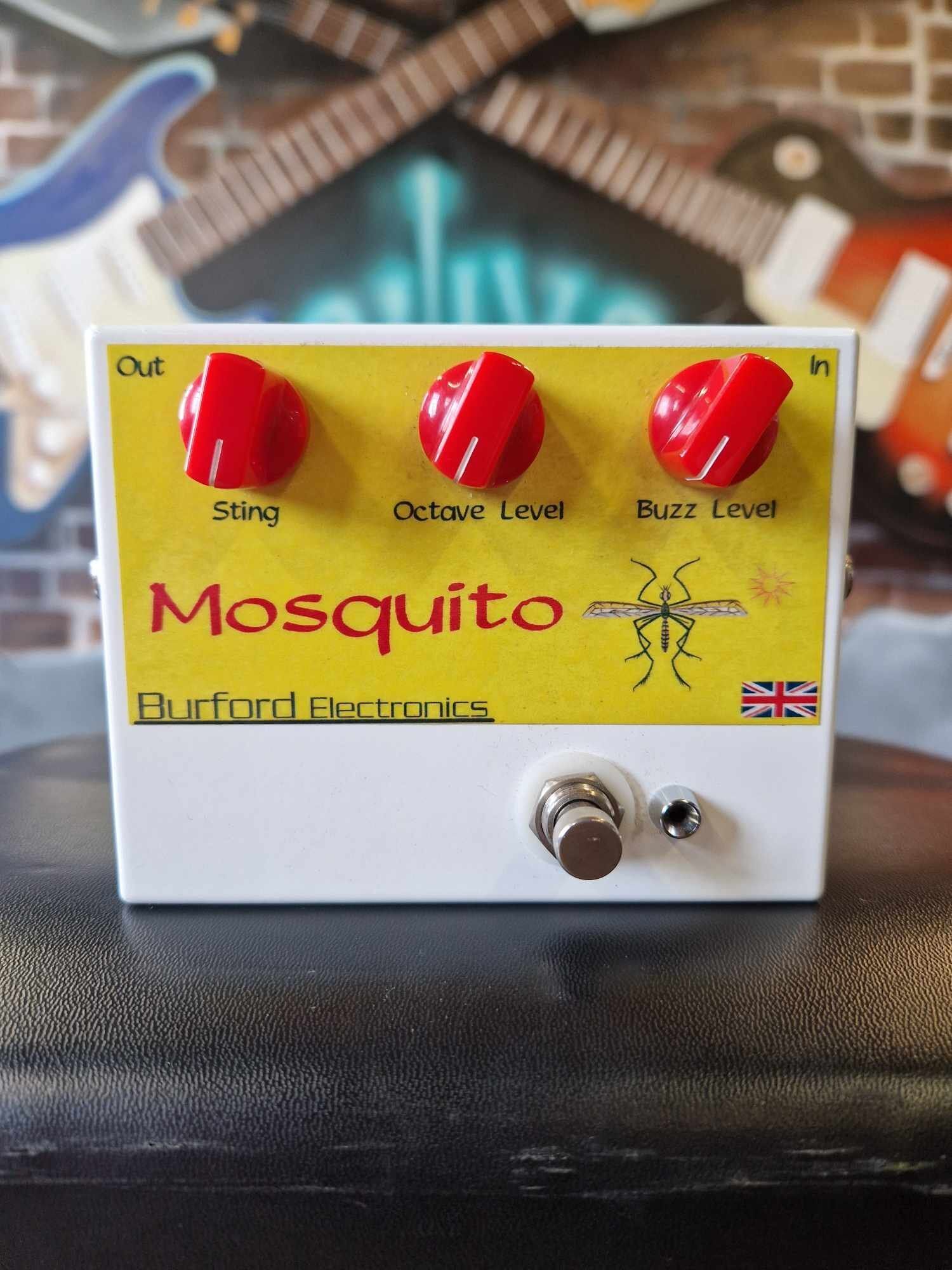
Burford Electronics Mosquito Fuzz Pedal Original - RefurbishedThis is a Burford Electronics Mosquito Fuzz Pedal. The Mosquito is a Fuzz/Octave pedal with a pretty unique sound, being closer to a fuzz more than a distortion this pedal delivers high octane fuzz sounds that will leave a sting. Here's what Burford Electronics say about the Mosquito Pedal: “A unique Octave up fuzz, which will give you pure fuzz on one twist of a knob & octave fuzz on one twist of another knob. So you can have your fuzz setting for a rich body & add octave fuzz to it or turn the fuzz down & just use the octave fuzz control for cutting lead. There is also a control called Sting, this is a tone filter that alters the voice of the octave from sharp to mellow. The octave is not over the top, on the lower register it is quite subtle, you can even play power chords and it holds together extremely well. Without that horrible modulation that is associated with some analogue octave up pedals, even some of the legendary expensive ones. Try soloing somewhere from the 8th fret upwards, it is very responsive and particularly so around 12th/15th fret and even higher. Neck and back pick ups give different sounds. Even playing positions will give different responses.”120,00 £*Shipping: 0,00 £Secure redirect to the provider



-
What is the etymology of the word Hexe?
The word "Hexe" comes from the Old High German word "hagazussa," which means "witch." This word is derived from the Middle High German "hag," meaning "hedge," and "zussa," meaning "sitting." The term "hagazussa" originally referred to a female magician or sorceress who was believed to have the ability to ride on the backs of animals and perform magical spells. Over time, the word evolved into "Hexe" in modern German. **
-
What is the etymology of the term "Blutblüte"?
The term "Blutblüte" is of German origin. It is a compound word made up of "Blut" meaning blood and "Blüte" meaning bloom or blossom. When combined, "Blutblüte" refers to the blooming or flourishing of blood, often used metaphorically to describe a period of violence or bloodshed. **
-
What is the connection between personal development, etymology, and philosophy?
Personal development, etymology, and philosophy are interconnected in the sense that they all involve the exploration and understanding of oneself and the world. Personal development focuses on self-improvement and growth, while etymology delves into the origins and meanings of words, and philosophy seeks to understand the fundamental nature of existence and knowledge. By studying etymology, one can gain insight into the historical and cultural context of words, which can in turn inform one's personal development and philosophical understanding. Philosophy, on the other hand, can provide a framework for understanding the deeper meaning and purpose of personal development, while also influencing the way we interpret and use language. Overall, these three areas of study are interconnected in their pursuit of self-awareness, understanding, and growth. **
-
What is the etymology of the term "Komplekte" in the DDRNVA?
The term "Komplekte" in the DDRNVA is derived from the German word "komplett," which means complete or entire. In the context of the DDRNVA, "Komplekte" refers to a set or collection of items that are necessary for a specific task or purpose. This term reflects the emphasis on organization and efficiency within the DDRNVA, as having all the necessary components in a "Komplekte" ensures readiness and effectiveness in carrying out military operations. **


What is the origin or etymology of the puzzled expression Nani Nanu?
The expression "Nani Nanu" originates from the Japanese language. "Nani" means "what" in Japanese, while "Nanu" is a playful and informal way of saying "what" in some Japanese dialects. When used together, "Nani Nanu" is a whimsical and light-hearted way of expressing confusion or puzzlement. It has gained popularity in internet culture and among fans of Japanese media. **
What is the origin or etymology of the surprised expression "Nani Nanu"?
The expression "Nani Nanu" originates from Japanese and is commonly used to express surprise or disbelief. In Japanese, "nani" means "what," and "nanu" is a colloquial variation of "nanda," which means "is" or "what is." When combined, "Nani Nanu" essentially translates to "What is it?" or "What's going on?" and is often used in anime, manga, and Japanese pop culture to convey shock or astonishment. **
Top-Angebote
Products related to Etymology:
-
All Categories Goods LED Solar Security Light Dual Motion Sensor Outdoor Floodlight With LED Technology For Energy Efficient Illumination LED Solar Security Light Dual Motion Sensor Outdoor Floodlight With LED Technology For Energy Efficient IlluminationBrighten your outdoor space with the 1 pcs of 22 LED Solar Security Light, designed for maximum visibility and security. Powered by ecofriendly solar energy, this motion sensor floodlight activates when movement is detected, offering both...63,97 $*Shipping: 0,00 $Secure redirect to the provider
-
What is the etymology of Turkish Pepper?
The term "Turkish Pepper" is believed to have originated from the use of a specific type of pepper called "Urfa biber" in Turkish cuisine. Urfa biber is a dried red pepper that is grown in the Urfa region of Turkey and is known for its smoky, earthy flavor with a mild heat. The name "Turkish Pepper" likely refers to the origin of this specific type of pepper and its association with Turkish cuisine. **
-
What is the etymology of the word Funk?
The word "funk" originated in the late 17th century, derived from the French word "fumet," meaning "smell" or "vapor." It was initially used to describe a strong, musty smell. Over time, the term evolved to describe a style of music characterized by a strong rhythmic groove and soulful vocals, popularized in the 1960s and 1970s. Today, "funk" is associated with a genre of music that blends elements of soul, jazz, and rhythm and blues. **
-
What is the etymology of the word Hexe?
The word "Hexe" comes from the Old High German word "hagazussa," which means "witch." This word is derived from the Middle High German "hag," meaning "hedge," and "zussa," meaning "sitting." The term "hagazussa" originally referred to a female magician or sorceress who was believed to have the ability to ride on the backs of animals and perform magical spells. Over time, the word evolved into "Hexe" in modern German. **
-
What is the etymology of the term "Blutblüte"?
The term "Blutblüte" is of German origin. It is a compound word made up of "Blut" meaning blood and "Blüte" meaning bloom or blossom. When combined, "Blutblüte" refers to the blooming or flourishing of blood, often used metaphorically to describe a period of violence or bloodshed. **
Similar search terms for Etymology
-
HARPERCOLLINS Creative Confidence by Tom & David Kelley – Unleashing Your Creative Potential & Innovation MindsetA powerful and inspiring book from the founders of IDEO, the award-winning design firm, on unleashing the creativity that lies within each and every one of us. Too often, companies and individuals assume that creativity and innovation are the domain of the ‘creative types’. But two of the foremost experts in innovation, design and creativity on the planet show us that each and every one of us is creative. In an entertaining and inspiring narrative that draws on countless stories from their work at IDEO, and with many of the world's top companies and design firms, David and Tom Kelley identify the principles and strategies that will allow us to tap into our creative potential in our work lives, and in our personal lives, allow us to think outside the box in terms of how we approach and solve problems. ‘Creative Confidence’ is a book that will help each of us be more productive and successful in our lives and in our careers.4,95 £*Shipping: 1,99 £Secure redirect to the provider
-
Burford Electronics Mosquito Fuzz Pedal Original - RefurbishedThis is a Burford Electronics Mosquito Fuzz Pedal. The Mosquito is a Fuzz/Octave pedal with a pretty unique sound, being closer to a fuzz more than a distortion this pedal delivers high octane fuzz sounds that will leave a sting. Here's what Burford Electronics say about the Mosquito Pedal: “A unique Octave up fuzz, which will give you pure fuzz on one twist of a knob & octave fuzz on one twist of another knob. So you can have your fuzz setting for a rich body & add octave fuzz to it or turn the fuzz down & just use the octave fuzz control for cutting lead. There is also a control called Sting, this is a tone filter that alters the voice of the octave from sharp to mellow. The octave is not over the top, on the lower register it is quite subtle, you can even play power chords and it holds together extremely well. Without that horrible modulation that is associated with some analogue octave up pedals, even some of the legendary expensive ones. Try soloing somewhere from the 8th fret upwards, it is very responsive and particularly so around 12th/15th fret and even higher. Neck and back pick ups give different sounds. Even playing positions will give different responses.”120,00 £*Shipping: 0,00 £Secure redirect to the provider
-
EUkeonjinn Round Wall Mirror Clear 61 cm x 61 cm26-45W output power, 192 LEDs/m high-density light strip with 6000K light temperature provide enough brightness 50,000 hours LED lifetime means it can last 45-46 years if using it 3 hours a day 0.2mm PVC shatterproof film prevents debris splashing after mirror break 10%-100% Step-less adjustment brightness to meet different brightness needs The memory function will remember your brightness setting when restart The IP45 rating for dust and water resistance ensures safe use in wet environments The 5mm silver mirror is not easy to oxidize, rust or blacken, and is more environmentally friendly and durable The high-definition mirror provides a 1:1 reflection that illuminates your beauty Anti-fog function & 1-hour delayed shut-off automatically The backlit CRI >90 Ra, close to natural light 2 Touch buttons control the light and defog respectively Package with customized thick foam and sturdy corner guards in a carton box Comes with wall-mounted hardware, it will only take a few minutes to assemble CSA certification: No, Weight Capacity: 158.8kg EUkeonjinn Size: 61 cm x 61 cm145,99 £*Shipping: 0,00 £Secure redirect to the provider
-
What is the connection between personal development, etymology, and philosophy?
Personal development, etymology, and philosophy are interconnected in the sense that they all involve the exploration and understanding of oneself and the world. Personal development focuses on self-improvement and growth, while etymology delves into the origins and meanings of words, and philosophy seeks to understand the fundamental nature of existence and knowledge. By studying etymology, one can gain insight into the historical and cultural context of words, which can in turn inform one's personal development and philosophical understanding. Philosophy, on the other hand, can provide a framework for understanding the deeper meaning and purpose of personal development, while also influencing the way we interpret and use language. Overall, these three areas of study are interconnected in their pursuit of self-awareness, understanding, and growth. **
-
What is the etymology of the term "Komplekte" in the DDRNVA?
The term "Komplekte" in the DDRNVA is derived from the German word "komplett," which means complete or entire. In the context of the DDRNVA, "Komplekte" refers to a set or collection of items that are necessary for a specific task or purpose. This term reflects the emphasis on organization and efficiency within the DDRNVA, as having all the necessary components in a "Komplekte" ensures readiness and effectiveness in carrying out military operations. **
-
What is the origin or etymology of the puzzled expression Nani Nanu?
The expression "Nani Nanu" originates from the Japanese language. "Nani" means "what" in Japanese, while "Nanu" is a playful and informal way of saying "what" in some Japanese dialects. When used together, "Nani Nanu" is a whimsical and light-hearted way of expressing confusion or puzzlement. It has gained popularity in internet culture and among fans of Japanese media. **
-
What is the origin or etymology of the surprised expression "Nani Nanu"?
The expression "Nani Nanu" originates from Japanese and is commonly used to express surprise or disbelief. In Japanese, "nani" means "what," and "nanu" is a colloquial variation of "nanda," which means "is" or "what is." When combined, "Nani Nanu" essentially translates to "What is it?" or "What's going on?" and is often used in anime, manga, and Japanese pop culture to convey shock or astonishment. **
* All prices are inclusive of VAT and, if applicable, plus shipping costs. The offer information is based on the details provided by the respective shop and is updated through automated processes. Real-time updates do not occur, so deviations can occur in individual cases. ** Note: Parts of this content were created by AI.