Buy 61.eu ?
We are moving the project
61.eu .
Are you interested in purchasing the domain
61.eu ?
domain@kv-gmbh.de · 0541-91531010
Buy 61.eu ?
What is the braking deceleration?
Braking deceleration refers to the rate at which a vehicle slows down when the brakes are applied. It is measured in meters per second squared (m/s^2) and represents the negative acceleration experienced by the vehicle as it comes to a stop. The braking deceleration depends on factors such as the vehicle's mass, the friction between the tires and the road, and the force applied to the brakes. A higher braking deceleration means the vehicle will come to a stop more quickly. **
How do I calculate the deceleration?
To calculate deceleration, you need to determine the change in velocity and the time it takes for that change to occur. Deceleration is calculated by dividing the change in velocity by the time taken for the change to happen. The formula for deceleration is: deceleration = (final velocity - initial velocity) / time. Make sure to use consistent units for velocity and time in your calculation. **
Similar search terms for Deceleration
Top-Angebote
Products related to Deceleration:
-
iFixit Essential Electronics ToolkitThe iFixit Essential Electronics Toolkit is a compact starter repair kit for phones, tablets, laptops, game consoles and other small electronics. It includes a precision bit driver with 16 precision bits plus the basic opening and prying tools needed for common repairs such as screen and battery replacements.40,99 £*Shipping: 0,00 £Secure redirect to the provider
-
HARPERCOLLINS Creative Confidence by Tom & David Kelley – Unleashing Your Creative Potential & Innovation MindsetA powerful and inspiring book from the founders of IDEO, the award-winning design firm, on unleashing the creativity that lies within each and every one of us. Too often, companies and individuals assume that creativity and innovation are the domain of the ‘creative types’. But two of the foremost experts in innovation, design and creativity on the planet show us that each and every one of us is creative. In an entertaining and inspiring narrative that draws on countless stories from their work at IDEO, and with many of the world's top companies and design firms, David and Tom Kelley identify the principles and strategies that will allow us to tap into our creative potential in our work lives, and in our personal lives, allow us to think outside the box in terms of how we approach and solve problems. ‘Creative Confidence’ is a book that will help each of us be more productive and successful in our lives and in our careers.4,95 £*Shipping: 1,99 £Secure redirect to the provider




-
How do you calculate the braking deceleration?
To calculate the braking deceleration, you need to know the initial velocity of the object, the final velocity (usually 0 if the object comes to a stop), and the time it takes for the object to come to a stop. The formula to calculate deceleration is: deceleration = (final velocity - initial velocity) / time. By plugging in the values for final velocity, initial velocity, and time into this formula, you can calculate the braking deceleration of the object. **
-
How does uniform deceleration work in physics?
Uniform deceleration in physics refers to a constant decrease in velocity over time. This means that the object is slowing down at a consistent rate. The rate of deceleration is measured in terms of acceleration, with a negative sign to indicate that it is in the opposite direction of the initial velocity. This can be represented by the equation a = (vf - vi) / t, where a is the acceleration, vf is the final velocity, vi is the initial velocity, and t is the time taken. Uniform deceleration is important in understanding the motion of objects and can be used to calculate stopping distances and braking forces in real-world scenarios. **
-
Friction on an inclined plane causes deceleration.
Friction on an inclined plane causes deceleration because it acts in the opposite direction of the object's motion. As the object moves up or down the incline, the friction force opposes its movement, reducing its speed. This deceleration is due to the friction force converting the object's kinetic energy into heat. The steeper the incline or the greater the coefficient of friction, the stronger the deceleration will be. **
-
What is the deceleration of the brakes 2?
The deceleration of brakes 2 is 5 m/s^2. This means that the brakes are slowing down the car at a rate of 5 meters per second squared. A higher deceleration value indicates a stronger braking force, which can help the car come to a stop more quickly. It is important for drivers to be aware of the deceleration of their brakes to ensure safe and efficient stopping. **


How do you calculate the braking deceleration 2?
To calculate the braking deceleration 2, you can use the formula: a = (v_f - v_i) / t, where a is the deceleration, v_f is the final velocity, v_i is the initial velocity, and t is the time taken to decelerate. First, determine the initial and final velocities of the object. Then, measure the time it takes for the object to come to a complete stop. Finally, plug these values into the formula to calculate the braking deceleration 2. **
What is the formula for deceleration in physics?
The formula for deceleration in physics is given by the equation: a = (v - u) / t, where a is the deceleration, v is the final velocity, u is the initial velocity, and t is the time taken. This formula calculates the rate at which an object slows down, or decelerates, over a certain period of time. Deceleration is a negative acceleration, so the value obtained from the formula will be negative, indicating a decrease in velocity. **
Top-Angebote
Products related to Deceleration:
-
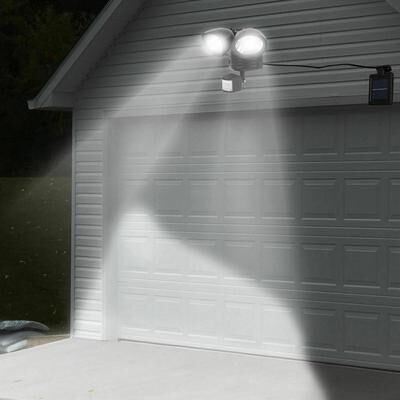
All Categories Goods LED Solar Security Light Dual Motion Sensor Outdoor Floodlight With LED Technology For Energy Efficient Illumination LED Solar Security Light Dual Motion Sensor Outdoor Floodlight With LED Technology For Energy Efficient IlluminationBrighten your outdoor space with the 1 pcs of 22 LED Solar Security Light, designed for maximum visibility and security. Powered by ecofriendly solar energy, this motion sensor floodlight activates when movement is detected, offering both...63,97 $*Shipping: 0,00 $Secure redirect to the provider
-
iFixit Essential Electronics ToolkitThe iFixit Essential Electronics Toolkit is a compact starter repair kit for phones, tablets, laptops, game consoles and other small electronics. It includes a precision bit driver with 16 precision bits plus the basic opening and prying tools needed for common repairs such as screen and battery replacements.40,99 £*Shipping: 0,00 £Secure redirect to the provider
-
What is the braking deceleration?
Braking deceleration refers to the rate at which a vehicle slows down when the brakes are applied. It is measured in meters per second squared (m/s^2) and represents the negative acceleration experienced by the vehicle as it comes to a stop. The braking deceleration depends on factors such as the vehicle's mass, the friction between the tires and the road, and the force applied to the brakes. A higher braking deceleration means the vehicle will come to a stop more quickly. **
-
How do I calculate the deceleration?
To calculate deceleration, you need to determine the change in velocity and the time it takes for that change to occur. Deceleration is calculated by dividing the change in velocity by the time taken for the change to happen. The formula for deceleration is: deceleration = (final velocity - initial velocity) / time. Make sure to use consistent units for velocity and time in your calculation. **
-
How do you calculate the braking deceleration?
To calculate the braking deceleration, you need to know the initial velocity of the object, the final velocity (usually 0 if the object comes to a stop), and the time it takes for the object to come to a stop. The formula to calculate deceleration is: deceleration = (final velocity - initial velocity) / time. By plugging in the values for final velocity, initial velocity, and time into this formula, you can calculate the braking deceleration of the object. **
-
How does uniform deceleration work in physics?
Uniform deceleration in physics refers to a constant decrease in velocity over time. This means that the object is slowing down at a consistent rate. The rate of deceleration is measured in terms of acceleration, with a negative sign to indicate that it is in the opposite direction of the initial velocity. This can be represented by the equation a = (vf - vi) / t, where a is the acceleration, vf is the final velocity, vi is the initial velocity, and t is the time taken. Uniform deceleration is important in understanding the motion of objects and can be used to calculate stopping distances and braking forces in real-world scenarios. **
Similar search terms for Deceleration
-
HARPERCOLLINS Creative Confidence by Tom & David Kelley – Unleashing Your Creative Potential & Innovation MindsetA powerful and inspiring book from the founders of IDEO, the award-winning design firm, on unleashing the creativity that lies within each and every one of us. Too often, companies and individuals assume that creativity and innovation are the domain of the ‘creative types’. But two of the foremost experts in innovation, design and creativity on the planet show us that each and every one of us is creative. In an entertaining and inspiring narrative that draws on countless stories from their work at IDEO, and with many of the world's top companies and design firms, David and Tom Kelley identify the principles and strategies that will allow us to tap into our creative potential in our work lives, and in our personal lives, allow us to think outside the box in terms of how we approach and solve problems. ‘Creative Confidence’ is a book that will help each of us be more productive and successful in our lives and in our careers.4,95 £*Shipping: 1,99 £Secure redirect to the provider
-
Burford Electronics Mosquito Fuzz Pedal Original - RefurbishedThis is a Burford Electronics Mosquito Fuzz Pedal. The Mosquito is a Fuzz/Octave pedal with a pretty unique sound, being closer to a fuzz more than a distortion this pedal delivers high octane fuzz sounds that will leave a sting. Here's what Burford Electronics say about the Mosquito Pedal: “A unique Octave up fuzz, which will give you pure fuzz on one twist of a knob & octave fuzz on one twist of another knob. So you can have your fuzz setting for a rich body & add octave fuzz to it or turn the fuzz down & just use the octave fuzz control for cutting lead. There is also a control called Sting, this is a tone filter that alters the voice of the octave from sharp to mellow. The octave is not over the top, on the lower register it is quite subtle, you can even play power chords and it holds together extremely well. Without that horrible modulation that is associated with some analogue octave up pedals, even some of the legendary expensive ones. Try soloing somewhere from the 8th fret upwards, it is very responsive and particularly so around 12th/15th fret and even higher. Neck and back pick ups give different sounds. Even playing positions will give different responses.”120,00 £*Shipping: 0,00 £Secure redirect to the provider
-
EUkeonjinn Round Wall Mirror Clear 61 cm x 61 cm26-45W output power, 192 LEDs/m high-density light strip with 6000K light temperature provide enough brightness 50,000 hours LED lifetime means it can last 45-46 years if using it 3 hours a day 0.2mm PVC shatterproof film prevents debris splashing after mirror break 10%-100% Step-less adjustment brightness to meet different brightness needs The memory function will remember your brightness setting when restart The IP45 rating for dust and water resistance ensures safe use in wet environments The 5mm silver mirror is not easy to oxidize, rust or blacken, and is more environmentally friendly and durable The high-definition mirror provides a 1:1 reflection that illuminates your beauty Anti-fog function & 1-hour delayed shut-off automatically The backlit CRI >90 Ra, close to natural light 2 Touch buttons control the light and defog respectively Package with customized thick foam and sturdy corner guards in a carton box Comes with wall-mounted hardware, it will only take a few minutes to assemble CSA certification: No, Weight Capacity: 158.8kg EUkeonjinn Size: 61 cm x 61 cm145,99 £*Shipping: 0,00 £Secure redirect to the provider
-
Friction on an inclined plane causes deceleration.
Friction on an inclined plane causes deceleration because it acts in the opposite direction of the object's motion. As the object moves up or down the incline, the friction force opposes its movement, reducing its speed. This deceleration is due to the friction force converting the object's kinetic energy into heat. The steeper the incline or the greater the coefficient of friction, the stronger the deceleration will be. **
-
What is the deceleration of the brakes 2?
The deceleration of brakes 2 is 5 m/s^2. This means that the brakes are slowing down the car at a rate of 5 meters per second squared. A higher deceleration value indicates a stronger braking force, which can help the car come to a stop more quickly. It is important for drivers to be aware of the deceleration of their brakes to ensure safe and efficient stopping. **
-
How do you calculate the braking deceleration 2?
To calculate the braking deceleration 2, you can use the formula: a = (v_f - v_i) / t, where a is the deceleration, v_f is the final velocity, v_i is the initial velocity, and t is the time taken to decelerate. First, determine the initial and final velocities of the object. Then, measure the time it takes for the object to come to a complete stop. Finally, plug these values into the formula to calculate the braking deceleration 2. **
-
What is the formula for deceleration in physics?
The formula for deceleration in physics is given by the equation: a = (v - u) / t, where a is the deceleration, v is the final velocity, u is the initial velocity, and t is the time taken. This formula calculates the rate at which an object slows down, or decelerates, over a certain period of time. Deceleration is a negative acceleration, so the value obtained from the formula will be negative, indicating a decrease in velocity. **
* All prices are inclusive of VAT and, if applicable, plus shipping costs. The offer information is based on the details provided by the respective shop and is updated through automated processes. Real-time updates do not occur, so deviations can occur in individual cases. ** Note: Parts of this content were created by AI.